
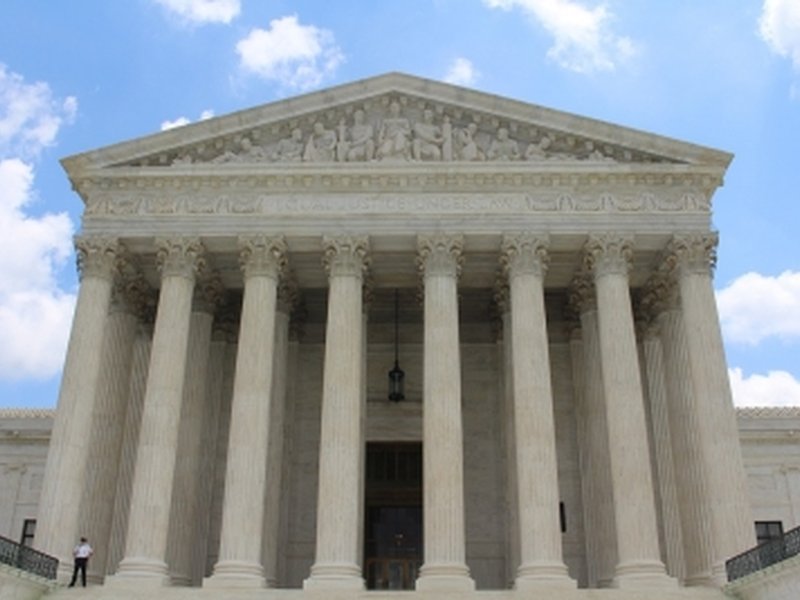
Washington, March 31 (IANS) The US Supreme Court will hear arguments in a closely watched case on birthright citizenship, which tests President Donald Trump’s bid to restrict automatic citizenship for children born to certain non-citizens and could reshape the meaning of the 14th Amendment and decades of legal precedent.
The case centres on an executive order issued by Trump. It directs federal agencies to deny citizenship to children born in the United States to parents who are either in the country unlawfully or on temporary visas. Lower courts have blocked the order. That has set up a legal showdown at the nation’s highest court.
At the heart of the dispute is the 14th Amendment. It grants citizenship to those born in the United States and “subject to the jurisdiction thereof”. The phrase has long been read to ensure birthright citizenship.
Trump has defended his policy. He says the Constitution was not meant to apply to all children born on US soil. He argues it should not cover children of parents without permanent legal status.
In a Truth Social post, Trump criticised the current system. He said it allows foreign nationals to secure citizenship for their children “For Pay”.
“Birthright Citizenship is not about rich people from China, and the rest of the World, who want their children, and hundreds of thousands more, For Pay, to ridiculously become citizens of the United States of America,” he wrote.
He added: “It is about the BABIES OF SLAVES! We are the only Country in the World that dignifies this subject with even discussion.”
Trump also attacked the judiciary.
“The World is getting rich selling citizenships to our Country, while at the same time laughing at how STUPID our US Court System has become,” he said.
“Dumb Judges and Justices will not a great Country make!”
Opponents of the order include civil rights groups and several states. They say long-standing legal precedent supports birthright citizenship. They argue the executive branch cannot override the Constitution.
The outcome could affect immigration policy. It could also change the legal definition of citizenship. Thousands of births each year could be affected.
The Supreme Court is expected to rule later this year. Legal observers say it could be one of the most important constitutional decisions in decades.
Birthright citizenship is rooted in the 14th Amendment. It was ratified in 1868 after the Civil War. It aimed to secure citizenship for formerly enslaved people and overturn the Dred Scott ruling.
In 1898, the Supreme Court ruled in United States v. Wong Kim Ark. It held that children born in the United States to foreign parents are citizens. That ruling has guided US law for more than a century.
Legal scholars say the case could test the limits of executive power. They say the court may revisit settled doctrine. But they also note the weight of precedent.
The case has drawn global attention. Many countries follow different rules. Some grant citizenship by parentage, not place of birth. The United States has long followed a broader rule.
The justices will review history and precedent. They will examine the phrase “subject to the jurisdiction thereof”. Their ruling could clarify its scope.
A ruling for the administration could mark a shift. It could narrow birthright citizenship. It could also trigger further legal challenges.
--IANS
lkj/rs