

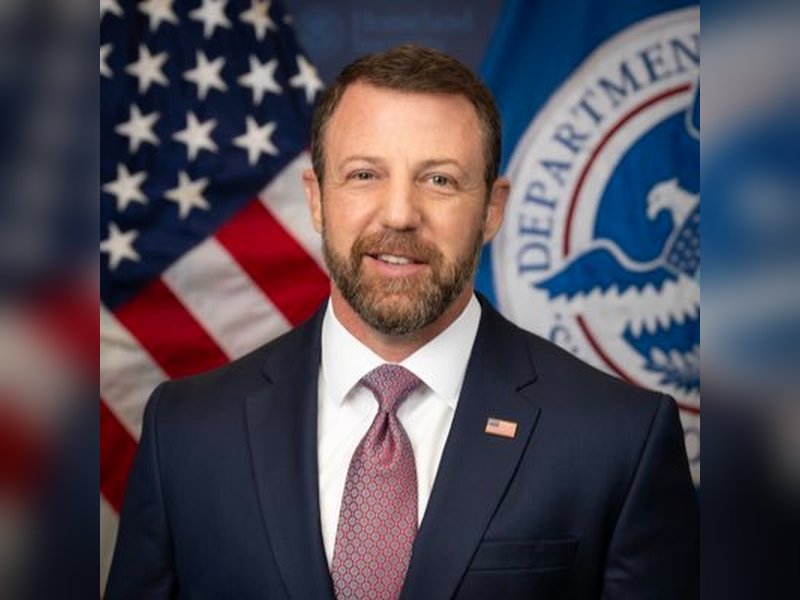
Washington, June 26 (IANS) The Trump administration is planning an artificial intelligence-driven overhaul of US visa processing and legal immigration services, including a new mobile application aimed at speeding up approvals, reducing paperwork and improving efficiency, Homeland Security Secretary Markwayne Mullin told lawmakers.
Appearing before the House Appropriations Subcommittee on Homeland Security, Mullin said the Department of Homeland Security (DHS) was modernising the immigration system to make legal migration faster while maintaining stricter security screening.
"We're building systems in right now to be able to do that through an automated system," Mullin said.
He said the first AI-enabled platform would become operational within 30 days.
"We're going to deploy the first one in 30 days," he said, adding that the initial rollout would focus on reducing the backlog in processing applications under the Deferred Action for Childhood Arrivals (DACA) programme.
Mullin said the department was also redesigning its application process to minimise errors that often delay visa approvals.
"Why can't we move this to a system that you can't submit the paperwork until it is filled out correctly?" he said. "The technology is there, we just have to adapt it."
The secretary disclosed that DHS was working with the Department of Commerce to develop a mobile application that would simplify immigration services for applicants.
"We're actually trying to build an app," Mullin said. "I briefed the president about it this week, and the president loved the idea."
He said the digital overhaul would improve efficiency for both applicants and employers.
"Every one we delay affects our economy," Mullin said.
Responding to questions from Congressman Dan Newhouse of Washington, Mullin said the department had significantly improved processing times for H-2A agricultural visas.
"It's a 15-day turnaround," he said. "A lot of these agricultural workers are known. They come back and forth, we see them every time."
He added that DHS was also examining ways to address labour shortages in sectors such as dairy farming, where existing visa rules differ from seasonal agricultural employment.
Mullin acknowledged that the department was simultaneously reviewing immigration cases approved during the previous administration.
"We're having to go back through and re-vet a lot of people," he said, adding that DHS had introduced additional screening measures while trying to improve efficiency.
The secretary stressed that the administration wanted legal immigration to function more effectively while continuing to enforce immigration laws.
"There is a right way to stay in this country, and there's a right way to become a citizen of this country," Mullin said. "You have to follow the laws that Congress passed."
The United States has increasingly turned to digital technologies and artificial intelligence to modernise government services, including immigration processing, as application volumes continue to grow. Federal agencies are deploying automation to reduce administrative delays, improve accuracy and strengthen identity verification.
India is among the largest sources of skilled professionals, students and employment-based visa applicants to the United States. Faster processing, digital applications and AI-assisted case management could benefit thousands of Indian applicants seeking legal pathways to study, work or live in the US, although visa eligibility and approvals will continue to be governed by existing immigration laws and regulations.
--IANS
lkj/rs