

New Delhi, August 14 (IANS) From sports to politics, to defence, and general life, women have moved from being beneficiaries to active drivers of India's development story.
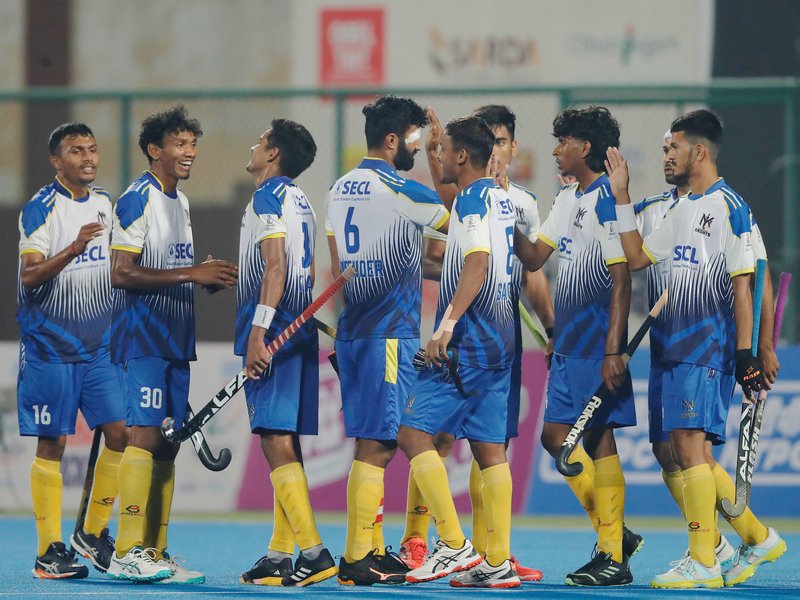
India's Nari Shakti was again in spotlight at the Commonwealth Games 2026 in Glasgow, with women athletes clinching eight of the nation's 13 gold medals and spearheading a historic campaign that saw the country finish fourth overall with 39 medals.
A document on "Sashakt Nari, Sashakt Bharat" depicts a nation where women are not just participants but leaders in the journey toward inclusive growth.
It underscores initiatives from the Union government led by Prime Minister Narendra Modi emphasising that women are central to the vision of 'Viksit Bharat by 2047'.
With sustained focus on education, health, financial inclusion, and representation, India is positioning women as the foundation of its vision for a developed nation by 2047.
From entrepreneurship to grassroots governance, Nari Shakti is advancing with strength and purpose with access to education, income, and decision-making now central to impact on families and communities.
In 2025, the first batch of 17 women cadets graduated from the National Defence Academy.
By early 2026, a total of 158 women cadets had joined the NDA since 2022.
Maternal and early childhood care have been strengthened through health services, nutrition support, and institutional delivery systems.
The Centre's Beti Bachao Beti Padhao (BBBP) addresses the declining child sex ratio (CSR) and related issues of women empowerment over a life-cycle continuum focusing on institutional deliveries, girls' secondary school enrolment, dropout reduction, and antenatal care registration.
According to the National Family Health Survey-5 (NFHS-5) of 2019-21, sex ratio rose to 1,020 females per 1,000 males from 943 females per 1,000 males in Census 2011.
Flagship initiatives such as Pradhan Mantri Matru Vandana Yojana (PMMVY) have reached more than 5.13 crore beneficiaries as on end-July, disbursing more than Rs. 20,571 crore in maternity benefits.
It is a maternity benefit scheme giving direct benefit transfers (DBT) to pregnant and lactating women where women receive Rs 5,000 in two instalments for the first living child, Rs 6,000 for a second child, if a girl.
Similarly, the Pradhan Mantri Surakshit Matritva Abhiyan (PMSMA) has conducted more than 6.85 crore antenatal check-ups, identifying more than one crore high-risk pregnancies for focused care.
The Janani Shishu Suraksha Karyakram (JSSK) has supported nearly two crore pregnant women annually with free institutional deliveries, including Caesarean sections, alongside free transport, medicines, and diagnostics.
Outcomes are visible; institutional births have risen to 90.6 per cent nationally, while antenatal care coverage has significantly improved compared to a decade ago.
Meanwhile, education reforms under the National Education Policy (NEP), 2020, and schemes like Samagra Shiksha and Kasturba Gandhi Balika Vidyalayas (KGBV) have expanded access and continuity for girls.
Female enrolment in schools reached nearly 12 crore in 2025–26, while higher education enrolment rose to 2.18 crore in 2022–23.
Scholarships such as the AICTE Pragati Scholarship, and targeted funds have further reduced dropout rates.
Women's participation in Science, Technology, Engineering, and Mathematics (STEM) has also grown.
The Vigyan Jyoti Scheme has benefitted more than 1.12 lakh girls, while supernumerary seats in IITs and NITs have doubled female representation.
Notably, women now constitute more than 53 per cent of University Grants Commission-National Eligibility Test Junior Research Fellowship scholars in STEM subjects.
Skill development programmes such as Pradhan Mantri Kaushal Vikas Yojana (PMKVY) have trained millions, with women comprising nearly 45 per cent of beneficiaries.
The newly launched NAVYA initiative focuses on digital skills for adolescent girls, preparing them for careers in cybersecurity, AI, and digital marketing.
Economic empowerment has been bolstered through Self Help Groups (SHGs) under the Deendayal Antyodaya Yojana – National Rural Livelihoods Mission (DAY-NRLM), a flagship poverty alleviation programme, which have accessed bank credit worth more than Rs 12.18 lakh crore.
And the Lakhpati Didi Scheme aims to ensure sustainable incomes of at least Rs 1 lakh annually for SHG members, covering more than 10 crore women nationwide.
In the health sector, under Ayushman Bharat Pradhan Mantri Jan Arogya Yojana (AB-PMJAY), 22.48 crore women have received health cards, enabling cashless access to secondary and tertiary care.
Preventive healthcare has expanded through Ayushman Arogya Mandirs, while the Ayushman Bharat Digital Mission has digitally linked more than 110 crore health records, nearly half belonging to women.
Immunisation drives under Mission Indradhanush and the nationwide Human papillomavirus (HPV) vaccination campaign have further strengthened women's health outcomes.
HPV is a common viral infection, some of which can lead to genital warts and various cancers.
Nutrition interventions under Saksham Anganwadi and Poshan 2.0 now serve nearly nine crore beneficiaries, including pregnant women, lactating mothers, and adolescent girls.
Women's safety and dignity are being addressed through Mission Shakti, which integrates protection and empowerment measures.
More than 15 lakh One Stop Centres and 642 Nari Adalats are operational, while the Women Helpline (181) has assisted more than one crore women.
Housing schemes have also prioritised women.
Under Pradhan Mantri Awas Yojana (PMAY)-Gramin (rural), nearly 96 lakh houses were allotted exclusively to women, while PMAY-Urban 2.0 sanctioned 1.25 crore houses, with one crore allotted to women.
Meanwhile, political representation is expanding.
Women now account for nearly half of India's electorate, and 14.5 lakh are serving as elected Panchayati Raj representatives.
The Nari Shakti Vandan Adhiniyam, 2023, (the 106th Constitutional Amendment Act) provides 33 per cent reservation for women in Lok Sabha, State Legislative Assemblies, and the Delhi Assembly, which will take effect following the post-census delimitation exercise.
--IANS
jb/khz