
Beijing, July 25 (IANS) Access to Tibet has become increasingly difficult amid China’s tightening grip on the region. Foreign journalists, diplomats, and independent researchers face tight entry restrictions while Tibetans risk reprisals for sharing photos, videos, or information with people outside China, a report has revealed.
Citing the Central Tibetan Administration, Tibet’s government-in-exile, a report in 'The Diplomat' noted that the Chinese authorities have intensified digital surveillance, facial-recognition technology, and online monitoring to restrict the flow of information.
American think tank Freedom House has likewise described "Tibet as one of the world’s least accessible places for independent journalism, making it increasingly difficult for reporters to verify events or document alleged abuses", the report mentioned.
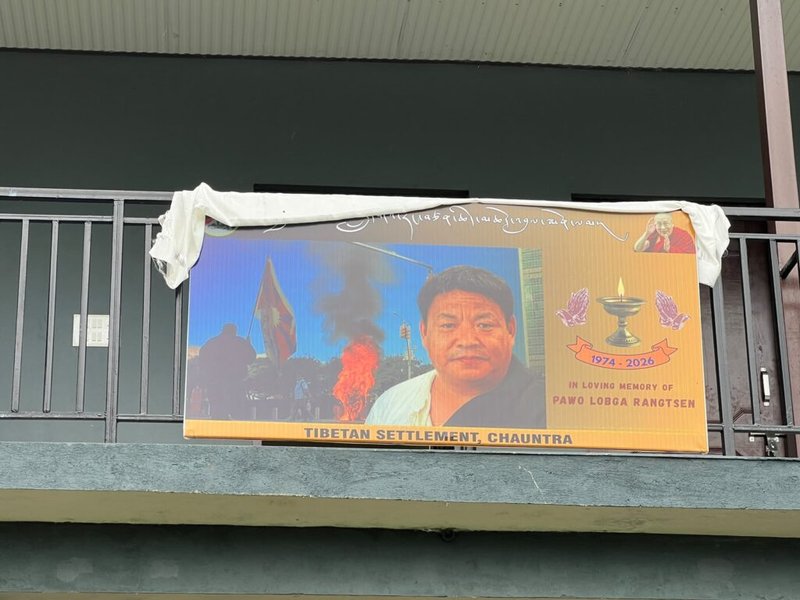
Against this backdrop, Tibetan activist Lobga Rangzen died following self-immolation outside the United Nations headquarters in New York.
The tragic incident unfolded on July 2 - a day after Beijing’s new so-called Promoting Ethnic Unity and Progress Law came into force.
"Lobga Rangzen chose perhaps the world’s most recognisable symbol of international diplomacy as the place of his death. Dressed in traditional Tibetan clothing, he planted a Tibetan flag on the sidewalk across from the entrance to the United Nations headquarters in New York on July 2. There, he set himself on fire, live streaming his self-immolation on Facebook. His final act was intended to draw attention to Tibet’s decades-long struggle under Chinese rule," The Diplomat mentioned.
While Rangzen's self-immolation was meant to focus international attention on Tibet, it said, the institution before which he carried out the act reacted only in a limited manner.
"Rangzen’s choice of site was carefully considered. For more than seven decades, Tibetans have looked to the United Nations in hopes that the international body would address China’s rule over Tibet. The Tibetan government first appealed to the UN in 1950 after Chinese forces entered Tibet. Although the issue reached the General Assembly, the organisation took no immediate action. After the People’s Republic of China assumed China’s UN seat in 1971, Tibet gradually disappeared from the organisation’s political agenda," the report detailed.
Speaking at a press briefing the following day, UN Secretary-General spokesperson Stephane Dujarric described the self-immolation as "absolutely tragic" and expressed condolences, but made no reference to Tibet or the political message behind Rangzen's protest.
Beyond the initial acknowledgement, the report said, the United Nations and most governments issued no meaningful public response to an act aimed at bringing Tibet back into the global spotlight. For many Tibetans, the muted reaction deepened a long-standing sense of frustration.
Highlighting the growing Chinese influence within global institutions, 'The Diplomat' report mentioned: "For many Tibetan advocates and scholars, the United Nations’ muted response to Rangzen’s protest reflects a broader shift in which Tibet has steadily receded from the organisation’s political agenda while China’s influence within international institutions has grown."
--IANS
scor/ksk/as