
London, March 16 (IANS) Pakistani military courts are being used for dealing with perceived threats to the security establishment. However, this action undermines fair trial guarantees and civilian judicial authority. The use of court martials against civilians after the May 9, 2023 protests and the Supreme Court’s 2025 decision to reauthorise these trials demonstrates a deeper militarisation, a report has stated.
"The core problem is structural where military courts are executive‑controlled forums designed to enforce discipline within the armed forces, not to adjudicate civilian guilt and innocence under ordinary criminal law. Proceedings are secret, judges are serving officers, and defendants are denied basic safeguards such as public hearings, independent and impartial tribunals, and full access to counsel and evidence," Sakariya Kareem wrote in UK-based newspaper Asian Lite.
The International Commission of Jurists (ICJ) has repeatedly said that Pakistan's military justice system is not compatible with fair administration of justice and violates Article 14 of the International Covenant on Civil and Political Rights (ICCPR). The protests held on May 9, 2023 after the arrest of former Pakistan Prime Minister Imran Khan provided an excuse to use military court against civilians. Protesters targetted General Headquarters (GHQ) in Rawalpindi, the Lahore Corps Commander’s house and other military sites.
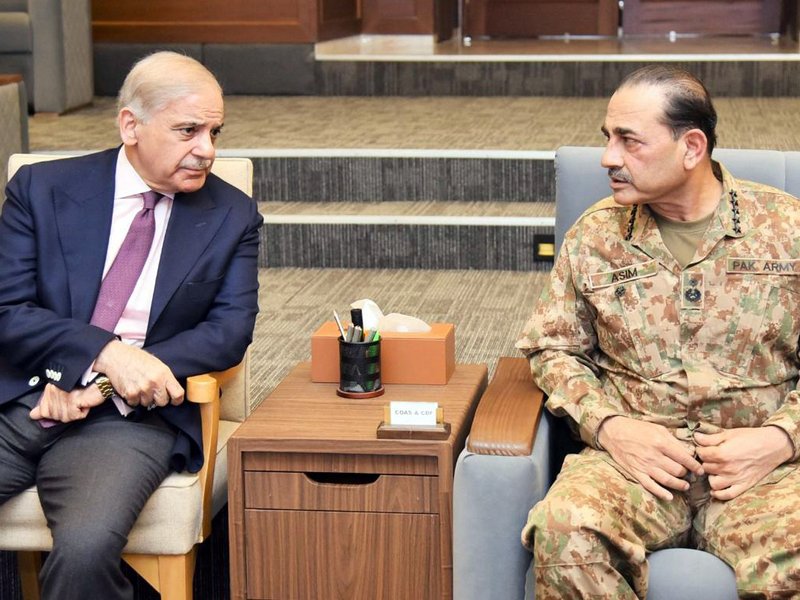
In response, Pakistan's army chief said that trial of alleged planners, abettors and perpetrators be conducted under the Pakistan Army Act 1952 and the Official Secrets Act 1923. Over 100 civilians accused of targetting military installations were removed from the ordinary court system and handed over to military jurisdiction.
In October 2023, a five-judge bench of the Supreme Court struck down the military trials of 103 civilians and held that section 2(1)(d) of the Army Act permitting civilians to be tried in military courts was not constitutional. The Court directed that trial of all the accused be conducted in civilian courts under ordinary criminal law. However, a larger supreme court bench in Pakistan overturned the earlier judgement on May 7, 2025.
The court overturned the earlier judgment, restored the contested Army Act provisions and allowed trial of civilians accused in the May 9 protests in military courts for offences targeting the armed forces and national security. The Court ordered the government to legislate within 45 days to provide a right of appeal, however, rights activists said that this did not serve the fundamental defects of secrecy, lack of independence and executive control characteristic of military justice, according to the report.
"The ICJ’s detailed analysis of these trials describes multiple due‑process violations. Defendants and their lawyers often lack access to charge sheets, evidence and judgments; proceedings are held in undisclosed locations; and families are denied information about hearing dates or outcomes until after sentences are handed down. Reports also point to the use of torture and ill‑treatment to extract confessions, as well as harassment of relatives attempting to attend proceedings or challenge convictions," Kareem wrote in Asian Lite.
"In earlier waves of military‑court activity under Pakistan’s 2015–2019 constitutional amendments, at least eight civilians were executed following secret trials, prompting the ICJ to label these executions unlawful and in breach of both domestic law and international obligations. The current cycle risks repeating this pattern, now directed at a new political constituency," the analyst added.
--IANS
akl/as