
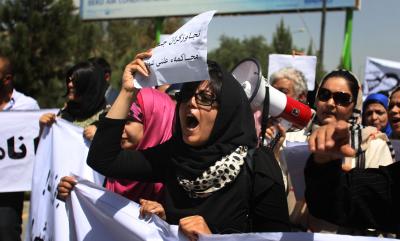
Kabul, May 27 (IANS) The United Nations (UN) Women has warned that the family law regulation issued recently by the Taliban authorities in Afghanistan marks yet another serious setback for the rights and safety of Afghan women and girls, sparking concerns that it could normalise child marriage and make it harder for women to leave unwanted marriages.
The remarks came amid mounting global criticism over the restriction on women's legal rights and protection after the Taliban's Ministry of Justice on May 14 passed a gazetted decree, setting out the grounds under which women may petition for judicial separation.
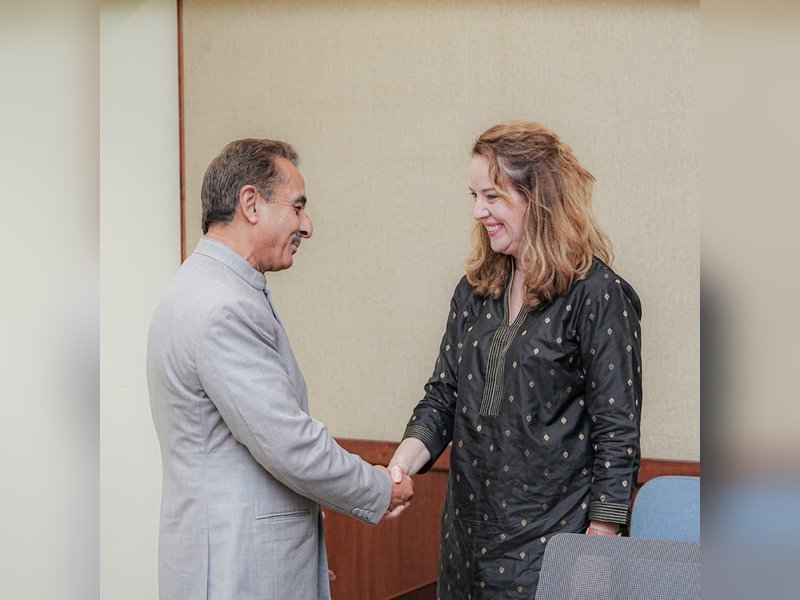
“As Afghanistan approaches five years since the Taliban takeover, this latest decree, published by the de facto Ministry of Justice on 14 May 2026, sets out the conditions for separation from a spouse, raising serious concerns around child marriage and women’s consent. It marks a break from laws in place before the takeover, which set a minimum age of marriage and criminalised forced and child marriage,” read a statement issued by Susan Ferguson, UN Women’s special representative in Afghanistan.
"By contrast, Decree no. 18 sets no minimum age of marriage. Instead, it outlines how a child marriage can be invalidated, or a child who was forced to marry could seek an annulment after they reach puberty. By implying that child marriage is permitted, it risks normalising the practice," she added.
According to Ferguson, the law makes it harder for a woman to separate from her spouse, adding that women face more complex legal barriers compared to men, including the need for multiple witness testimonies to support their petition. In some cases, she noted that a husband can override his wife’s separation claim through a statement or withholding consent.
“Afghan women and girls have the right to live free from violence and discrimination. They are entitled to dignity, safety, freedom of movement and participation in public life. Legal frameworks must uphold equality before the law, protect women from all forms of violence, and ensure meaningful access to justice without discrimination,” she stressed.
UN Women called on the Taliban authorities to ensure that all laws and policies protect the rights of women and girls, in line with Afghanistan’s commitment under international human rights treaties and conventions.
Meanwhile, Richard Lindsay, the United Kingdom’s special envoy for Afghanistan, said that he shares the concerns raised by the United Nations Assistance Mission in Afghanistan (UNAMA), British lawmaker Hamish Falconer and others regarding the Taliban’s ‘decree 18', describing it as another "oppressive measure" that should be revoked.
“I echo the concerns of Hamish Falconer and others, including UNAMA, regarding the Taliban’s ‘decree 18'. This is yet another oppressive measure that must be rescinded. The women and girls of Afghanistan deserve equality in all areas of life,” Lindsay posted on X.
Condemning the law, Falconer took to X and posted: "I'm appalled by reports of new Taliban laws permitting child marriages in Afghanistan. Girls should be protected, not forced into harm. Child marriage is always and everywhere a breach of basic human rights.”
--IANS
scor/as