
New Delhi, Nov 21 (IANS) When Prime Minister Narendra Modi arrived in Delhi after resigning as the Gujarat Chief Minister, the message from the corridors of power was unmistakable: "Mr Modi, this is Delhi, not Gujarat". But PM Narendra Modi was hardly someone who would allow Delhi's established political culture to define his style of functioning. He had arrived with his own experiences, instincts and an unmistakable determination to do things differently.
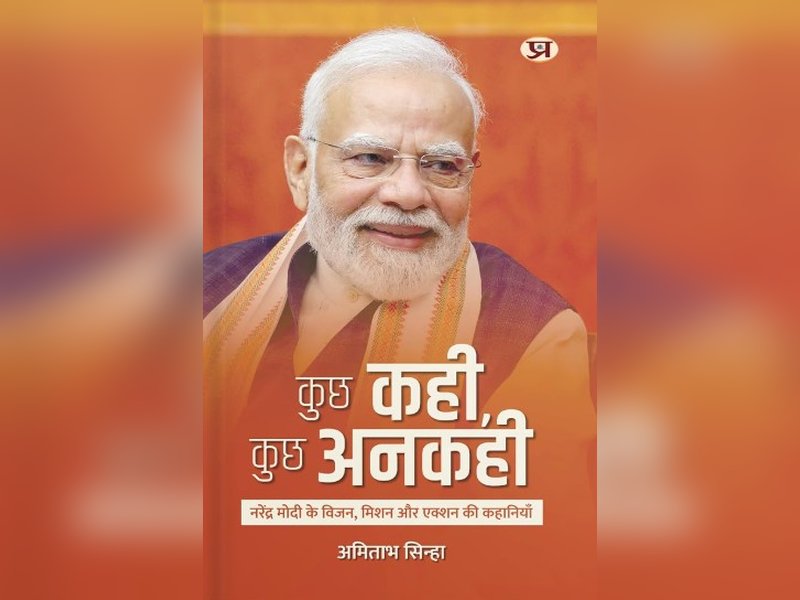
In his book, 'Kuch Kahi, Kuch Ankahi', author Amitabh Sinha brings together several interesting anecdotes like this from PM Modi's political journey, offering glimpses of the little-known moments that shaped his approach to governance.
One such episode dates back to 1997, when Narendra Modi was a BJP General Secretary in Delhi.
Despite his hectic travel schedule, he made time for evening tea with journalists in his modest office.
Sinha, who was beginning his television journalism career around the same time, regularly visited him.
He was particular about one thing: journalists should not twist facts.
"Don't go around the story. Show what is true", was the message he often conveyed. Years later, Sinha recalls how these conversations offered an insight into PM Modi's emphasis on public interest and national interest.
Another defining moment came in 2001, after a devastating earthquake struck Gujarat. The then Gujarat Chief Minister Narendra Modi was sent from Delhi to oversee relief and rehabilitation efforts amid complaints about the state government's response.
Sinha recalls sharing a flight with him to Ahmedabad. The aircraft was almost empty, and Narendra Modi, visibly distressed by the tragedy in his home state, was eager to get to work.
After landing, he did not head to a hotel or seek rest. He went straight to the BJP office in Khanpur in Ahmedabad, and began assessing the situation.
What followed was particularly striking. Narendra Modi, according to the author, received little support from either the state government or the local administration. Yet he began travelling across the state, focusing on ensuring that relief material arriving from across India and abroad reached earthquake victims.
The devastation in Kutch left a lasting impression on him.
According to Sinha, the experience became an important lesson in administration: even when institutional support is missing, determination and a spirit of service can keep the work moving.
Narendra Modi's relationship with India's bureaucracy offers another revealing anecdote.
After becoming the Prime Minister, he once admitted that he had been particularly apprehensive of IAS officers when he was the Gujarat Chief Minister.
Over the years, however, he sought to change the traditional administrative mindset.
Initiatives such as Pro-Active Governance And Timely Implementation (PRAGATI) spotlights the PM's emphasis on punctuality, accountability and citizen-centric governance.
He directly reviewed projects and addressed administrative bottlenecks with senior officials through PRAGATI.
The author also recalls Narendra Modi speaking at a Holi gathering with journalists about his early days in Delhi.
"Before becoming Prime Minister, he had distributed press releases and even arranged chairs for journalists during press conferences."
PM Modi's ability to turn public participation into a force for governance is another characteristic highlighted in the book.
During the Covid-19 pandemic, his appeal for people to come together, from clapping for frontline workers to participating in the vaccination drive, became part of a larger effort to mobilise citizens during an unprecedented crisis.
For Amitabh Sinha, who has followed Narendra Modi since 1997, these episodes highlight a recurring pattern: learning from every responsibility, adapting to challenges and translating small experiences into larger administrative decisions.
--IANS
brt/khz