
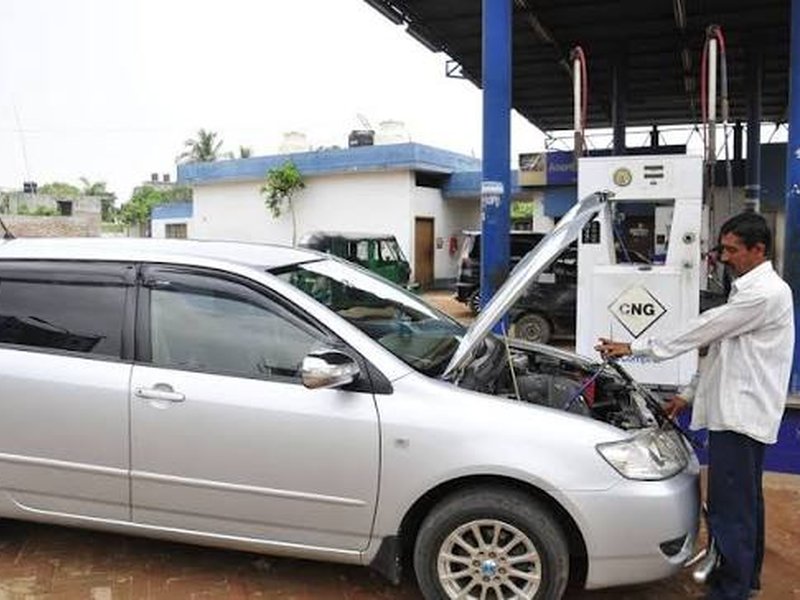
Dhaka, Aug 31 (IANS) Amid an escalating energy crisis in Bangladesh, gas supply in August fell to its lowest level since the early stages of the Covid pandemic, pushing the country towards a near standstill, local media reported.
The average daily gas supply dropped to 2,235 million cubic feet per day (mmcfd) this month -- the lowest level recorded for the month in a decade, Bangladesh's leading newspaper The Daily Star reported, citing an analysis of gas-supply data from 2017 to 2026.
Reports suggest that the US-Israel war has disrupted Bangladesh's LNG supplies, with Qatar, one of the country's major long-term suppliers, currently not providing contracted volumes and pushing Dhaka increasingly dependent on the spot market.
However, spot-market procurement has become increasingly difficult and costly, putting further strain on Bangladesh's already stretched gas supply. The shortfall has also rapidly spilt over into the power sector, disrupting electricity generation.
At the peak of the crisis this month, the country's average hourly power generation deficit reached around 3,000 megawatts, while dozens of gas-fired generating units struggled due to fuel shortages.
On Sunday afternoon, the Bangladesh Power Development Board generated only 12,688 MW against the demand of 16,278 MW.
Gas-based power production reportedly stood at around 5,000 MW against an installed capacity of at least 12,000 MW.
With gas pressure remaining inadequate and power outages becoming frequent, factories across Bangladesh's major industrial belts are being forced to either curtail production or operate at drastically reduced capacity, The Daily Star reported.
Highlighting the deepening crisis, Fazlee Shamim Ehsan, executive president of the Bangladesh Knitwear Manufacturers and Exporters Association, said: "It is difficult to describe the situation simply in terms of factory closures because production is fluctuating sharply from day to day -- on some days, production falls to zero, while on other days it may reach only around 20 per cent."
The gas crisis is affecting almost every factory to varying degrees, leaving uncertainty over how many could eventually be forced to close.
"If the government does not take action, many factories could move towards closure," said Ehsan, also the managing director of Fatullah Apparels.
Production at factories facing gas shortages has dropped up to 50 per cent, according to Md Shehab Udduza Chowdhury, vice-president of the Bangladesh Garment Manufacturers and Exporters Association (BGMEA).
For BGMEA members, such a drop in output can double production costs, potentially pushing factories into losses, The Daily Star reported.
--IANS
scor/sd/