

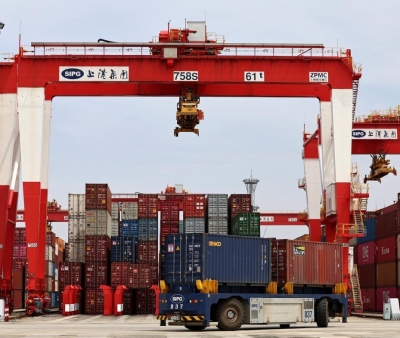
New Delhi, Sep 17 (IANS) China’s growing role in overseas port projects has delivered local improvements in capacity and turnaround times, but could not deliver on broader economic promises and in some cases produced negative side‑effects, a new report has said.
The report from The Diplomat pointed to ports improvements in countries like Bangladesh, Myanmar, and the Philippines as an example of China failing to deliver on broader ambitions, as it did not uncover major revenue or tax boosts.
Further, the partnership with China also marked no "technology transfer, blossoming SEZs, or dramatically positive trade pattern changes in the four regions."
However, port improvements in these countries fuelled increased capacity, improved turnaround times, higher rankings and local development, along with job creation.
"China’s port presence may be associated with negative outcomes, too. These may include the crowding out of local maritime firms, the loss of jobs at ports, accelerated deindustrialization, greater trade imbalances, and dependence on Chinese shipping networks," the report noted.
As China’s recent 8th 'Silk Road Maritime International Cooperation Forum' kept the spotlight on Chinese overseas ports, the publication flagged several concerns, such as Chinese port involvement always not reaching fruition and, even if it does, "deliverables may not match desires.”
In 47 per cent of the Southeast and South Asian cases studied, projects diverged from their original designs because of local port defects, domestic politics, host‑country financing limits, contractor capacity or opposition from third parties.
Further, China’s ports participation frequently yields benefits at the level of ports, but not necessarily at the local, regional, or national levels.
The net return may cause anti-port sentiments in host countries that "impede project initiation, development, and results."
Such sentiments could limit closer relations between host countries and China or prevent adverse third-party foreign policy effects, said the report.
—IANS
aar/na