
Dhaka, Sep 13 (IANS) The Bangladeshi government’s decision to skip the 18th BRICS Summit in New Delhi on September 12–13 has cost the country a big diplomatic opportunity to engage with major global and regional powers, making the move hard to reconcile with the country's national interests, a report has stated.
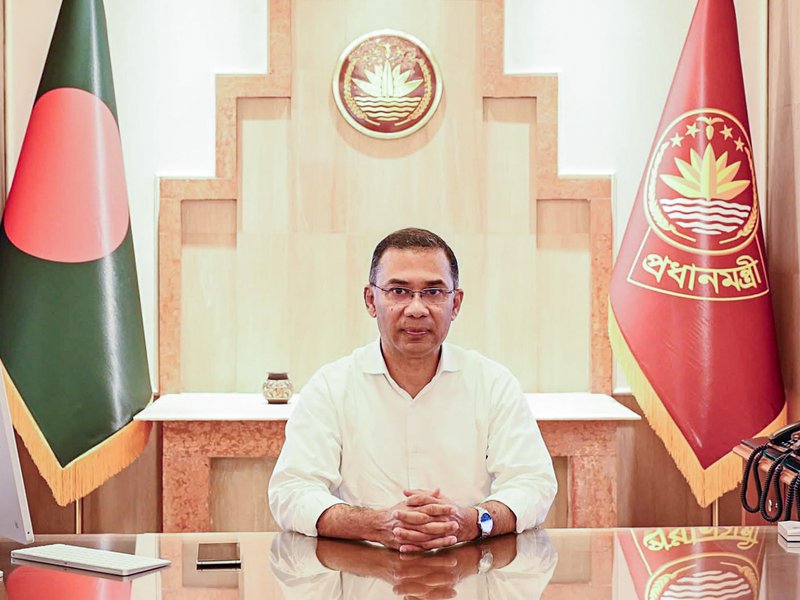
It noted that the country’s State Minister for Foreign Affairs, Humayun Kobir's remarks that Prime Minister Tarique Rahman was not invited to the summit in his capacity as Prime Minister, but rather as chair of BIMSTEC, are particularly unfortunate.
While the distinction may be procedurally relevant, treating it as a compelling reason for Bangladesh not to participate exposes a troubling lack of diplomatic maturity. In fact, Bangladesh’s position as BIMSTEC chair should have made the invitation more valuable, not less, a report in Bangladesh’s newspaper Daily Sun stated.
“Dhaka could have used the occasion to project itself as an important voice for the Bay of Bengal region. It could have placed BIMSTEC more prominently on the international agenda and used high-level meetings with India, China, Russia and other participating countries to advance regional connectivity, trade, energy cooperation, climate resilience and the Rohingya issue. Instead, the BIMSTEC dimension appears to have been treated almost as a technicality,” the report detailed.
“This is the mentality of a foreign ministry measuring diplomatic importance by protocol rather than by outcomes. There is another problem. Publicly emphasising whether an invitation was extended to the prime minister in one formal capacity or another risks making Bangladesh appear unnecessarily thin-skinned,” it added.
The report noted that a BRICS summit bringing together Chinese President Xi Jinping, Russian President Vladimir Putin, Prime Minister Narendra Modi and other major leaders creates diplomatic opportunities that cannot easily be replicated through formal meetings or diplomatic notes exchanged months later.
Bangladesh could have used the opportunity to discuss trade, investment, energy security, infrastructure financing, technology, climate finance and supply-chain diversification, it stated.
“It could have strengthened engagement with China and Russia, managed its relationship with India through direct high-level diplomacy and cultivated deeper economic relationships with Indonesia, Brazil, the Gulf states and African economies,” the report highlighted.
According to the report, the real concern is not one missed summit but what the episode exposes about the quality of strategic thinking within Bangladesh’s Foreign Ministry.
“Foreign policy cannot be conducted as a series of reactions to perceived diplomatic slights, protocol disputes or narrowly interpreted invitations. It requires anticipation, imagination and the ability to see several moves ahead. Bangladesh needs that kind of diplomacy more than ever,” it stated.
The report noted that Bangladesh’s foreign policy should be guided by one overriding question—whether an engagement advances the country’s national interests—and in the case of BRICS, the answer was plainly yes.
“Dhaka had an opportunity to engage simultaneously with major powers, emerging economies, development financiers and important regional partners. It could have strengthened ties with China and Russia, maintained high-level engagement with India, expanded economic links with the wider Global South and projected BIMSTEC as a meaningful regional platform. Instead, Bangladesh has chosen to watch from the sidelines,” it mentioned.
--IANS
scor/ksk/as