

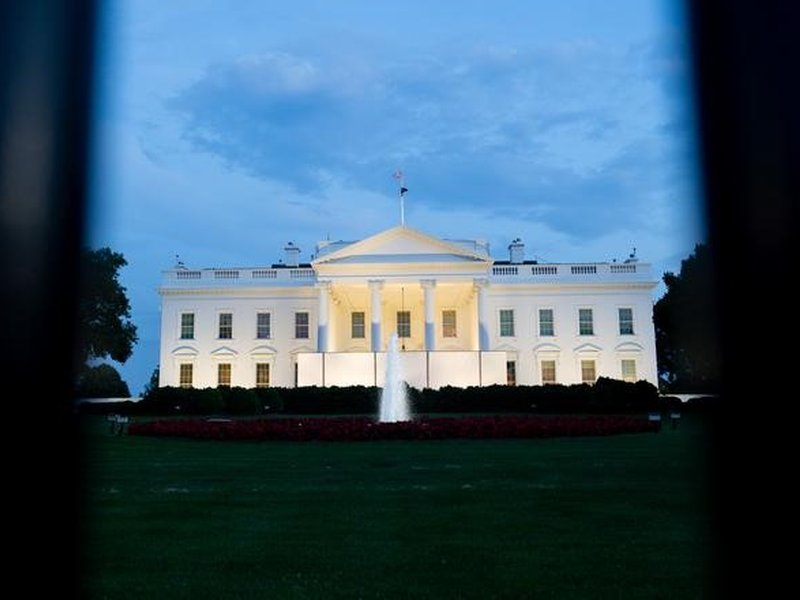
Washington, April 3 (IANS) The White House said that new trade agreements, including with India, have helped rebalance global trade and reduce US deficits under Donald Trump’s tariff strategy.
Marking one year since what it calls “Liberation Day”, the White House said the US economy is now more resilient, competitive and secure.
“One year ago today, President Trump threw away the illusions of ‘free trade’ to finally put Americans and America First,” White House spokesman Kush Desai said. “The results since Liberation Day have been astonishing: over 20 new trade deals, trillions in manufacturing investments, lower drug prices, and lower goods trade deficits.”
“And this is just the beginning of the President’s transformation of global trade: as these investment and trade deals continue taking effect, and more get signed, Americans can count on the best being yet to come,” Desai said.
The administration said the US goods trade deficit fell 24 per cent from April 2025 through February 2026 compared to a year earlier. It added that the deficit has declined every month on a year-on-year basis since the policy shift.
Officials said bilateral trade balances improved with more than 63 per cent of trading partners. The goods trade deficit with China dropped by 32 per cent over the past year and by 46 per cent from April 2025 through January 2026.
For the first time since 2000, China is no longer the country with which the United States has its largest trade deficit, the statement said.
The deficit with the European Union also fell sharply, dropping by nearly 40 per cent over the same period. The United States has also begun running a goods surplus with Switzerland for the first time since 2012.
The White House said foreign producers were bearing part of the tariff costs. Citing a Bank of England study, it said export prices to the United States fell while prices to other countries did not, indicating that overseas exporters lowered prices to remain competitive.
The administration said it has secured more than 20 trade agreements with major partners including the European Union, Japan, India, Vietnam and Argentina. These deals, it said, cover over half of global GDP and reduce non-tariff barriers while opening new markets for US agriculture, energy and industrial goods.
Officials also pointed to a resurgence in manufacturing. “Trillions in private and foreign investments are fueling a historic reshoring of American industry, bring jobs, production, and supply chains back home,” the statement said.
Investments span companies such as Apple, Toyota, Micron and Pfizer, it added.
Shipments of core capital goods reached record highs in 2025, while capital goods imports as a share of total imports also hit a record level.
Manufacturing activity expanded in early 2026 for the first time in more than two years, with growth continuing through February and March. The industrial production index is now at its highest level since 2019, the White House said.
In 2025, the United States surpassed Japan in crude steel production for the first time since 1999, becoming the world’s third-largest steel producer behind China and India.
The administration said American workers have seen strong wage gains. Private sector workers recorded real wage increases of more than $1,400 in one year, with higher gains in manufacturing, construction, and mining.
“These strong results prove that President Trump’s America First trade policies are making our country wealthy, strong, and respected once again,” the statement said.
Trade policy has been a central element of Trump’s economic agenda, with tariffs aimed at reducing dependence on imports and encouraging domestic production. The approach has reshaped trade flows and triggered negotiations with key partners.
The United States remains one of the world’s largest trading economies, with India, the European Union and China among its major partners. Trade deficits, industrial output and wage trends continue to be closely tracked as indicators of the policy’s long-term impact.
--IANS
lkj/rs