
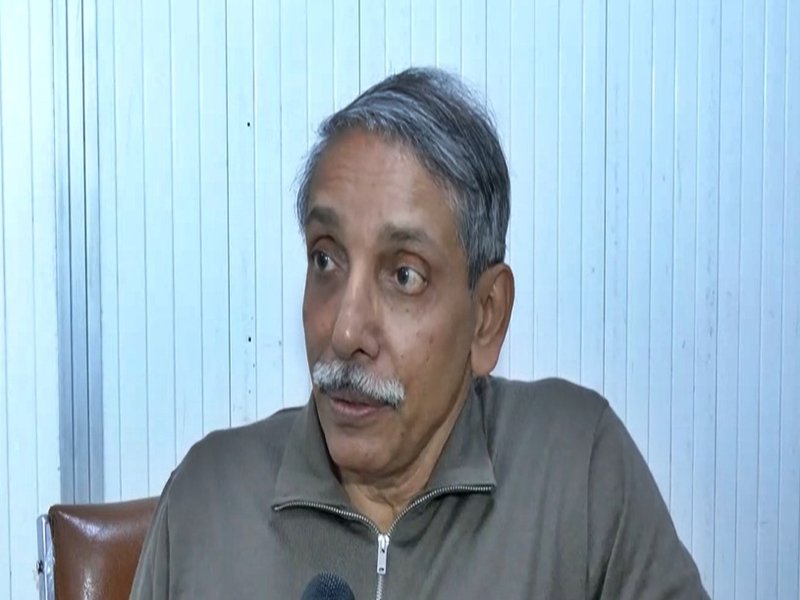
New Delhi, Dec 18 (IANS) Former University Grants Commission (UGC) Chairman Prof. M. Jagadesh Kumar has hailed the government's move to introduce the Viksit Bharat Shiksha Adhishthan (VBSA) Bill as a historic transformation for India’s higher education sector.
In an exclusive interaction with IANS, Kumar explained that the UGC, established in 1953 and accorded statutory status in 1956, along with the All India Council for Technical Education (AICTE) and the National Council for Teacher Education (NCTE), will be merged into a single integrated regulator under the proposed framework.
Kumar noted that India's higher education landscape has expanded rapidly, with more than 1,200 universities and thousands of colleges currently operating across the country.
He stressed that outdated regulatory mechanisms are inadequate for managing such a vast and complex system, which is why the National Education Policy (NEP) 2020 explicitly called for a comprehensive overhaul of the regulatory architecture.
The former UGC chairman pointed out that institutions at present have to navigate multiple regulators, including the Council of Architecture, creating significant operational challenges. A single university offering diverse programmes -- such as general degrees like BSc or BCom, engineering courses, teacher education programmes like BEd, and architecture -- is required to comply with separate applications, rules, and processes laid down by different bodies.
This, he said, not only results in administrative burdens but also leads to overlapping and sometimes conflicting regulations. Addressing these issues was a key objective of the NEP 2020, which recommended a single, harmonised regulatory system that is simpler, less bureaucratic, and more predictable.
The newly introduced VBSA Bill reflects this vision and will first be examined by a Joint Parliamentary Committee before being taken up for passage and implementation.
Kumar said that once the legislation comes into force, an apex body -- the Viksit Bharat Shiksha Adhishthan (VBSA) -- will be established, functioning through three distinct verticals to prevent conflicts of interest while ensuring coordinated governance.
The Regulatory Council will consolidate the powers currently exercised by the UGC, AICTE, NCTE, and the Council of Architecture, thereby eliminating confusion and establishing uniform and transparent norms for all higher education institutions.
The Accreditation Council will bring together existing frameworks such as NAAC, NBA, and NIRF under a single umbrella, streamlining accreditation processes and reducing duplication in data submission.
Meanwhile, the Standards Council will work towards introducing consistent academic benchmarks nationwide, facilitating smoother mobility for students pursuing multidisciplinary programmes or transferring across states, he said.
Kumar emphasised that teachers are central to the success of the higher education system, and this council will also focus on developing new teacher training programmes and promoting contemporary teaching and learning practices.
He highlighted that, for the first time, premier institutions such as the Indian Institutes of Technology (IITs) and Indian Institutes of Management (IIMs), which earlier remained outside the direct regulatory ambit of the UGC or AICTE, will be brought under a common regulatory framework, ensuring uniform quality standards across the sector.
Kumar further said that student interests are a core focus of the proposed system.
All institutions will be required to establish effective grievance redressal mechanisms, recognising the stress and anxiety faced by many students and the importance of timely resolution of complaints.
Student feedback on courses, faculty, infrastructure, and welfare initiatives will play a significant role in accreditation and ranking outcomes.
Perhaps the most consequential change, he noted, will be the emphasis on transparency. Institutions will be mandated to place comprehensive information on a digital platform, including details of academic programmes, infrastructure, student support systems, faculty qualifications, and audited financial accounts.
This, Kumar said, would empower students and parents, enhance public trust, and strengthen institutional accountability across India’s higher education ecosystem.
--IANS
sktr/pgh