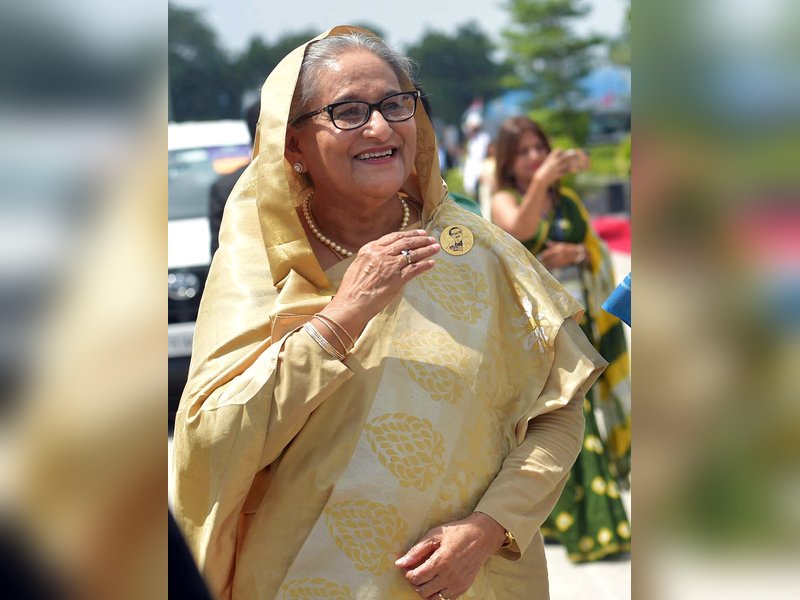
New Delhi, Jan 7 (IANS) Bangladesh Nationalist Party (BNP) leader Tarique Rahman’s return to Dhaka after a 17-year exile does not represent renewal or reform for Bangladesh; rather it may widen the political polarisation, deposed Bangladeshi Prime Minister Sheikh Hasina told IANS in an exclusive interaction on Wednesday.
“Tarique Rahman’s return does not represent renewal or reform; it represents a return to a politics that Bangladesh has already paid a heavy price for,” stated the 78-year-old former premier of Bangladesh.
“He has spent years living comfortably in exile, far removed from the daily realities faced by ordinary Bangladeshis, after fleeing accountability for corruption and abuse of power,” added the daughter of Sheikh Mujibur Rahman – architect of Bangladesh's Independence.
The 58-year-old son of the seventh President, Ziaur Rahman, and first female Prime Minister of Bangladesh, Khaleda Zia, is also known as Tarique Zia in his country.
He was accused by Hasina’s government of running a parallel power centre and corruption during the Khaleda-regime. As Bangladesh passes through uncertainty and violence, the spotlight has shifted towards Tarique Rahman, who is leading a BNP-led alliance in Bangladesh general election slated for February 12.
His return to Dhaka after 17 years in exile in the United Kingdom has reignited debates about the future of India–Bangladesh relations. Thus, his moves are being closely monitored, not only by New Delhi, but other nations as well.
While appealing to BNP’s nationalist base, which often does view India with suspicion, he is trying to position himself as a defender of Bangladesh’s sovereignty, indicating equidistance from India, China, and Pakistan at the same time.
However, Sheikh Hasina told IANS that rather than the country treading a path towards renewal or reform, Tarique’s presence may further widen the chasm of political polarisation in Bangladesh.
At present there is uncertainty and fear in Bangladesh with the situation worsening for minority communities since the ousting of Sheikh Hasina. There has been a significant rise in mob violence and targeted attacks on minorities, particularly Hindus.
Reports suggest at least 11 Hindus have been killed across Bangladesh over a 35-day period.
These point to a sustained rise in violence against the minority community since Sheikh Hasina was deposed in 2024.
The lynching of several minority community citizens in recent times has raised an alarm among global rights organisations.
“His presence is likely to deepen political polarisation rather than heal it. Leadership requires accountability, transparency, and engagement with the people, not direction from abroad followed by sudden re-entry when conditions appear favourable,” according to Sheikh Hasina.
The BNP alliance is tipped to be leading in popularity in the run-up to the general election slated for February 12.
Tarique Rahman, often called the “dark prince”, has emerged ahead of other leaders in the race for being Bangladesh’s next Prime Minister, according to reports quoting surveys.
“In the past months, we have seen a deeply troubling wave of intimidation and coercion by BNP activists who are forcing ordinary Bangladeshis, including Awami League supporters, to vote for their party under threats of violence or destruction,” Hasina told IANS.
Expressing her doubts over the future ahead of the February polls, the former premier added, “Bangladesh’s future cannot be built on figures whose political legacy is defined by corruption, violence, and alliances with extremist forces.”
Meanwhile, a Dhaka court has set January 21 to frame charges in a high‑profile sedition case naming around 285–286 accused including the former premier.
It is one of several legal actions against Sheikh Hasina since her ouster, where a separate special tribunal in November handed a death sentence in absentia on “crimes against humanity” charges, said reports.
--IANS
jb/rad