
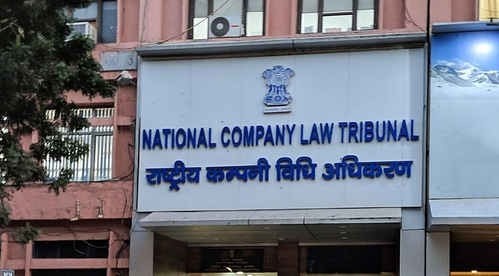
New Delhi, Aug 27 (IANS) There has been widespread reporting that banks have taken a 99.97 per cent haircut on over Rs 22,000 crore of loans to Essel Group founder Subhash Chandra, with the National Company Law Tribunal approving repayment of only around Rs 6.5 crore, but according to government sources, "this is incorrect".
Subhash Chandra did not personally borrow Rs 22,000 crore. The Rs 22,006 crore figure represents the total claims admitted against him as a personal guarantor for debts borrowed by several Essel/Zee-linked companies.
The sources said that only around Rs 2,574 crore of claims relate to loans where his personal guarantee was given at the time of the original borrowing. Most other guarantees were provided later as additional security.
Therefore, the Rs 22,006 crore admitted-claims figure should not be presented as Rs 22,006 crore originally lent on the strength of Subhash Chandra’s personal guarantee, according to sources.
The insolvency proceeding is against Subhash Chandra as a personal guarantor, not against the principal corporate borrowers. The proceeding arose after he had provided a personal guarantee for a loan to Vivek Infracon from India Bulls. Following default, insolvency proceedings were initiated against him as a personal guarantor.
The reported 99.97 per cent haircut is, therefore, not a 99.97 per cent loss on Rs 22,000 crore of bank loans. It is the reduction in claims recoverable specifically from Chandra in his capacity as personal guarantor. The approved repayment from his personal estate is around Rs 6.25 crore.
The principal borrowers remain separately liable. The repayment plan envisages around Rs 1,494 crore of payments by the principal borrowers, in addition to Rs 6.25 crore from Chandra personally. Creditors also retain recovery pathways against securities and other available assets of these companies. Subash Chandra’s statement also claims that companies have paid Rs 43,000 crore till now to the creditors, said sources.
The Rs 6.5 crore personal recovery reflects the assets presently available/realisable from Subhash Chandra's estate. Creditors did contest this, pointing to historical net-worth certificates showing Rs 45,888 crore in 2017 and Rs 40,562 crore in 2018 against a presently disclosed net worth of Rs 31.79 crore, and sought deeper scrutiny of his assets.
The repayment plan was not imposed unilaterally by the NCLT. It received 80.81 per cent voting support from creditors. Several lenders, including LIC Housing Finance, HDFC Bank, Axis Bank, Canara Bank, RBL Bank, and Union Bank, opposed it, but the NCLT held that the objections were insufficient to overturn the creditor-approved plan.
Thus, creditors will continue to pursue recovery from the principal borrowers, securities and other available assets, even after the settlement of Subhash Chandra’s personal-guarantor liability.
The Subhash Chandra case is an exceptional personal-guarantor resolution and is not representative of corporate insolvency recoveries under the Insolvency and Bankruptcy Code.
Creditors have recovered around Rs 4.32 lakh crore through approved resolution plans up to March 2026. Recoveries were 116.85 per cent of liquidation value and 94.56 per cent of fair value.
Since the introduction of the IBC, over 32,000 cases were settled before admission into the insolvency process, unlocking assets worth Rs 14 lakh crore. This captures the deterrent effect of the law: borrowers settled after an IBC application was filed but before the case was formally admitted.
Net NPAs of Scheduled Commercial Banks fell from 5.94 per cent in March 2018 to just 0.48 per cent by September 2025, while the absolute amount fell from about Rs 5.2 lakh crore to Rs 0.94 lakh crore.
An IIM Ahmedabad study found that resolved firms recorded 76 per cent growth in sales, 50 per cent growth in total assets, a 50 per cent increase in employee expenses, meaning higher employment and 130 per cent growth in capital expenditure.
--IANS
na/vd