
Islamabad, Oct 13 (IANS) Pakistan has been increasing its military commitments in the Middle East at a time when it is struggling to control the fronts it already possesses. In September, Pakistan conducted fresh airstrikes in Afghanistan while its other disputes remain unresolved, a report has detailed.
On August 7, Saudi Arabia, Pakistan and Turkey signed the Mecca Joint Defence Agreement. Under the pact, an attack on any one country would be considered an attack on all three nations. The agreement reflected the shared commitment of the three nations "to further strengthen their collective security and to promote peace, security, and stability in the region and beyond, in pursuit of a secure and prosperous future", a statement released by Pakistan's Ministry of Foreign Affairs mentioned.
As Saudi Arabia's confrontation with the Houthis escalates, Pakistan has moved beyond diplomatic engagement towards providing military support. Pakistan has not yet decided to deploy its forces to fight in Yemen. Pakistan's involvement today can increase through defence commitments, military coordination, advisors and material support, without parliamentary accountability in which elected lawmakers decide where the red line of the country lies, according to the report in EU Reporter.
"The paradox is that Pakistan is expanding its military commitments in the Middle East at precisely the moment when it is struggling to control the fronts it already has. In late September, it carried out fresh air strikes inside Afghanistan, as confrontation with the Taliban government and the threat from the TTP have turned the western frontier into an active theatre of conflict. To the east, the fragile de-escalation with India following the serious military confrontation of 2025 remains under strain: while the dispute over the Indus Waters Treaty remains unresolved," Dimitra Staikou wrote in EU Reporter.
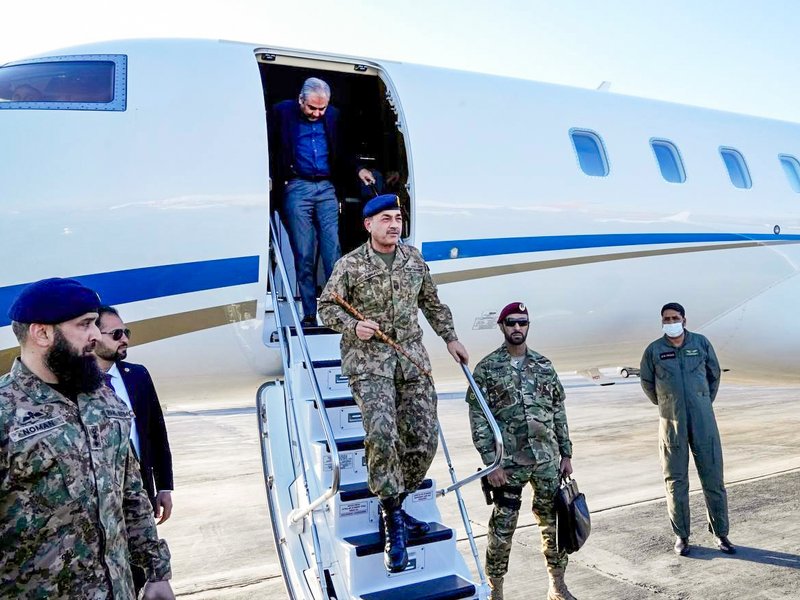
"Yet on October 5, Islamabad agreed with Turkey to the rapid deployment of military forces and capabilities to Saudi Arabia under the Mecca Pact, while Pakistani support for Riyadh’s operations against the Houthis has already moved beyond diplomatic solidarity to military equipment, advisers and operational assistance. A country conducting strikes across the Afghan border while managing an exceptionally fragile relationship with India is simultaneously choosing to expand its military obligations in the Gulf. Saudi Arabia has obvious reasons to want Pakistani military power; it is far less obvious what vital Pakistani interest is served by gradual involvement in yet another war. Here, the comparison with 2015 becomes even more damning," the author added.
In 2015, Saudi Arabia had requested Pakistan to provide military support for its intervention in Yemen. At the time, Saudi Arabia's request was raised in Pakistan's parliament, where lawmakers chose neutrality, stressing that intervention in Yemen could damage Islamabad's ties with Tehran and spark tensions between Shia and Sunni communities in Pakistan.
"In 2026, by contrast, there is a danger that the ambitions of the military establishment — regional influence, strategic prestige and the army’s emergence as an indispensable security partner for the Gulf monarchies — are being presented as the interests of the country itself. But the interests of Pakistan’s generals are not, by definition, the interests of Pakistan. And when elected institutions no longer possess the same power to make that distinction, strategic overreach ceases to be merely bad foreign policy. It becomes a symptom of who really governs," Staikou wrote in EU Reporter.
--IANS
akl/as