
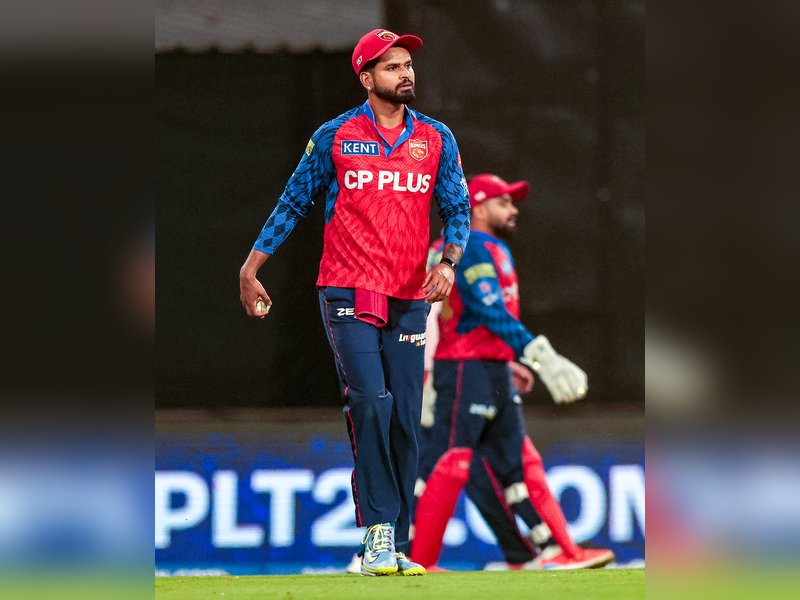
New Delhi, April 23 (IANS) South Africa’s left-arm fast bowling all-rounder Marco Jansen has been emerging as a genuine all-rounder for Punjab Kings (PBKS). In last year’s Indian Premier League (IPL), Jansen finished as PBKS’ joint second-highest wicket-taker with 16 scalps from 14 matches.
While known for his Power-play spells, Jansen’s best returns came in the middle overs, where he claimed six wickets at 8.5 runs per over. After having a good time for the Proteas in the T20 World Cup, Jansen has been a vital cog in PBKS’ bowling wheel, as the side remains the only unbeaten team in IPL 2026.
In a virtual roundtable chat facilitated by the franchise ahead of their clash against Delhi Capitals, Jansen reflected on skipper Shreyas Iyer, being a first-change bowler, how hard lengths have given him good returns in the shortest format, and more. Excerpts:
Q. What kind of leader is Shreyas Iyer, and the reason behind him being an inspirational skipper
A. Shreyas, as a captain, is definitely up there, if not on top. He's a pleasure to work with. He knows what he's doing. He knows what he wants from the players. He motivates and drives us to play our best. It gives us the space to do what we do well, if that makes sense. It's not a case of it's his way or the highway type of thing, which I think is a very nice feeling as a bowler and a player.
He knows what he wants. He knows what he wants to achieve. He's very goal-driven. He's very headstrong. It's very easy to see when we are in meetings and stuff like that, and in training. He's very driven. I think from a team's point of view, it's nice to have a captain like that. So it's like you sort of just follow his lead.
He's going to lead the team in a way where it's going to put the team in a position to not just win games, but also, if you're lucky enough, win a trophy as well. It's nice to play under his captaincy. He's up for discussions. He's always welcoming. It's never a case of it feels like a dictatorship. He makes everyone feel valued and welcomed.
As a player, it's very, very nice to have a captain like that where you feel you can go to the captain, you can express, or you can speak about certain things about the game. Not just that, but he'll give his advice, or he'll give his two cents about it as well, and then he'll formulate a plan with you to help you get better if need be and to take the team forward and stuff like that, which is nice.
Q. With Xavier Bartlett sharing the new ball with Arshdeep Singh, how has it been for you to adapt, especially with batters looking to hit hard at the bowlers?
A. I'm used to taking the first or second over, but I also know that I do have the skills to adapt to whatever situation or to adapt to any situation or any particular time in the match to come in and do a job for the team. Obviously, as a swing bowler or someone who's used to bowling with the new ball, you do have a weapon in your hand as well.
So coming in in the third, fourth, or sometimes fifth over is definitely a different approach that I had to take. But it's not a case of me thinking that I can't do a job or I can't take wickets or thinking, okay, cool, there is my weapon taken away. It's nothing like that. It’s actually the opposite because Arshdeep and Xavier swing the ball consistently and more than I do.
I understand that. At the same time, I also realise and understand that I have different attributes, different skills that I bring to the bowling unit and to the table. It's just from a bowling unit; everyone knows that wherever we bowl, there's a plan, there's a reason. It's not a case of, in my case, that they don't believe I can't do a good job bowling the first or second over with the new ball.
It's a case of how are we going to bowl well with the ball as a unit, if that makes sense. Yuzi (Chahal) is bowling in the middle, Shashank is not bowling in the first few games, and then all of a sudden comes in and takes two in his first over in this season. So I think it's a good place to be.
It's a nice place to be at as a bowler and a player and as a bowling unit because we know it doesn't matter where we bowl, or where Shreyas decides to bowl a certain bowler or a particular bowler. We know there's a reason behind it, and we know that whoever has the ball in his hands at that particular time, whether it's in a power play in the middle or at the death, we fully believe and we trust that that guy will do the best job for the team.
Q. You have been sticking to hard lengths more often than not. Do you think that has been one of the reasons for you doing well in both Test cricket and T20 as well?
A. It doesn't surprise me because Josh Hazlewood does the exact same. People still ask the same. I still ask the same question. How does he just hit a length and he picks up wickets, he doesn't go for a lot of runs, and he's consistent as well. He also has variations.
I also have one or two variations. But I think it comes down to both of us. We're tall bowlers. We bowl different lengths. There's something different we give to a bowling unit that makes sense. I think the problem, especially when I was younger, was that I came in where I was trying to bowl similar to what other guys were bowling, if it makes sense.
Not realising that what I bring to the table is different or is completely different from what other bowlers are bringing to the table. I have to find my own way to be effective and to put in consistent performances for the team. I think the last year or so, I've felt comfortable in my own skin.
I've felt comfortable in doing what I feel is best to help me stay consistent and perform consistently. Obviously, you're going to get your off days, but the goal is just to try and stay consistent and not have those good performances few and far between – so try and stack them as close as possible.
Q. Do you have a different approach to your bowling plan for the afternoon matches compared to the evening ones, keeping in mind the pitch and conditions?
A. No, it's the same approach. I think just what I bowl or the options change based on the conditions. So if a wicket is good, like the previous game, the wicket was really, really good for batting, we felt. That approach, sort of on the go, you sort of try and formulate a way of going about it.
There's no set way of bowling, or there are no preconceived ideas about how I want to go about it. I obviously have the basics that I stick to and that I always do, and I always follow the processes that I follow. But it's always a case of trying to sum up the conditions as quickly as possible and then finding a way to be as effective as I can be on that particular day.
Q. What has been the discussion within the bowling group, and how have you been able to support each other on the field in terms of defensive tactics in death overs?
A. It's not a case of going defensively. I think it's a case of we're trying, we're always assessing and thinking of ways to stop the opposition from scoring and obviously make it as hard as possible for them to score runs, especially at the death and in the power play as well.
But we just approach it differently because in the power play, you only have two fielders out, and at the death and in the middle overs, you have five fielders out. So it makes it a bit easier for us as a bowling unit to sort of bowl towards a certain plan if it makes sense to bowl. There are more fielders who can help you get wickets.
For us at the death, I think if the opposition is batting well, how do we stop them from scoring? If we're on top, how do we stop them from scoring, but also at the same time, how can we bowl them out and get the innings done and dusted as quickly as possible?
Because batters are so good, they hit sixes over the point these days. I don't know how they do it, but they do it. So it's quite difficult to set a particular plan for all the batters. It's just about trying to be smart and just basically keeping them on their toes. You always have to make the batter think twice or guess what the next ball is going to be.
--IANS
nr/bsk/