

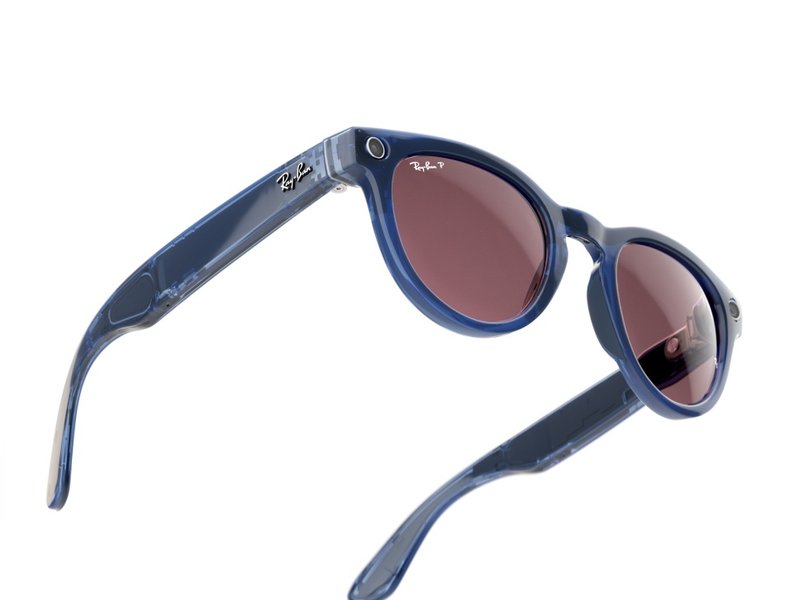
New Delhi, March 2 (IANS) Global smart glasses shipments grew 139 per cent year‑on‑year in the H2 CY25, driven by "Meta’s expanding product portfolio, new AI smart glasses models and seasonal demand," a report said on Monday.
The report from Counterpoint Research said India recorded a 15‑fold surge in shipments in H2 CY25 following Meta’s official launch in the country in May 2025, though the country still accounted for only 2 per cent of global volume.
AI smart glasses accounted for 88 per cent of total shipments in H2 CY25 as demand for basic smart audio glasses softened, further shifting the product mix toward AI-enabled models, the report said.
Smart glasses shipments are expected to see strong growth in 2026 and beyond, supported by aggressive expansion plans from leading players and the entry of new brands. However, the ongoing memory price increases may pose some headwinds, the research firm forecasted.
“Since current AI glasses enjoy relatively high gross margins and memory costs account for only a small portion of total expenses, we expect the price increase impact to be limited for now,” it said.
India is already seeing many players which will be introducing India’s first AI glasses, the release said adding, China’s share declined in H2 CY25 to 6 per cent despite an increase in shipment volume.
In H2 CY25, the global retail average selling price (ASP) of AI smart glasses increased to around $360 from $347 in H1 2025.
Although numerous products were launched in China by the end of 2025, most devices shipped in relatively limited volumes, it added.
North America remained the largest market with 37 per cent of shipments and Western Europe's share rising to 30 per cent.
"The strong momentum in AI glasses was supported by seasonal demand, Meta’s expanding product lineup, and a wave of new launches, particularly from Chinese vendors, including Li Auto, Rokid & BOLON, Baidu, Meizu, and several smaller OEMs," the report said.
—IANS
aar/pk