

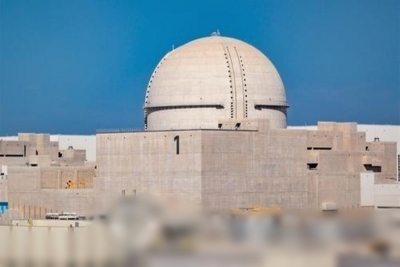
New Delhi, March 26 (IANS) Bangladesh stands on the threshold of a historic milestone as fuel loading is scheduled to start at the first unit of the country’s Rooppur Nuclear Power Plant on April 7, bringing the reactor alive for the generation of electricity, according to an article in the Dhaka-based The Daily Star newspaper.
Fuel loading is one of the most delicate and sensitive phases in the life of a nuclear reactor. Consequently, issues of safety, radiation control, and technological reliability become paramount as even a minor lapse can have consequences of extraordinary magnitude, Physics Professor at Dhaka University, Dr Kamrul Hassan Mamun, states in the article.
He cites the examples of the Chernobyl disaster and the Fukushima Daiichi nuclear disaster to illustrate how rare but catastrophic failures in nuclear systems can reshape societies and environments for decades. These examples underline a simple truth: nuclear power demands the highest standards of safety, technical competence, and transparent oversight.
Mamun says that for many years, he has expressed reservations about Bangladesh undertaking such a highly sensitive project largely through foreign loans, foreign companies, and foreign technical expertise. Countries do not normally enter the nuclear power era without first building a strong domestic scientific and technological base.
In most successful nuclear programmes, a nation develops its own generation of world-class nuclear scientists, engineers, and regulatory experts before constructing reactors. Without such a foundation, a nuclear power project risks becoming primarily an imported technological system rather than an integrated national capability, the professor observes.
He also points out that a nuclear reactor is an immense source of power. A single reactor often produces around 1,000 megawatts or more. Introducing such a large block of electricity into a relatively weak or unstable national power grid can create serious technical challenges.
Electric grids operate on a delicate balance between supply and demand. Frequency, voltage, and load must remain synchronised across the entire network. Even small disturbances can propagate through the system, causing cascading failures. If a grid is not robust enough, a sudden injection—or loss—of a large power source can destabilise the entire system.
This risk becomes particularly significant when a large nuclear reactor is involved. Unlike gas turbines or hydroelectric plants, they cannot easily ramp production up or down in response to sudden changes in electricity demand, the professor points out. Gas turbines and hydropower stations typically play this balancing role. When nuclear and flexible sources operate together in the same grid, careful coordination becomes essential.
Another major consideration is the transmission infrastructure required to distribute nuclear-generated electricity across the country. A power plant such as Rooppur will produce electricity far from many major load centres. Delivering this power efficiently requires strong high-voltage transmission lines capable of carrying large quantities of electricity over long distances. If the transmission network is weak or insufficient, several problems can arise.
Beyond infrastructure lies an even deeper issue: the development of scientific and technical capacity. History shows that major scientific achievements are rarely the result of short-term training programmes. They emerge from sustained intellectual ecosystems—universities, research institutions, and vibrant scientific cultures, Mamun states.
Professor Mamun cites the trajectory of nuclear science in India to drive home his point. Scientists such as Homi Jehangir Bhabha played a foundational role in establishing the country's nuclear research programme. Bhabha was not only an internationally respected physicist but also connected to leading figures such as Albert Einstein. His work laid the intellectual groundwork for India's nuclear development.
India later produced influential scientists like Vikram Sarabhai and R. Chidambaram, who contributed significantly to the country's scientific and technological progress.
Mamun states that the true measure of success of the Rooppur nuclear power plant will not lie solely in the operation of the reactor. It will depend on whether Bangladesh can build the broader ecosystem required to sustain such technology—strong universities, robust regulatory institutions, skilled engineers, resilient power grids, and a culture of scientific excellence.
If Bangladesh can rise to that challenge, nuclear power may indeed become a pillar of its long-term energy security. If not, the lesson will be clear: technology imported without deep domestic capacity can illuminate cities—but it cannot by itself build a nation's scientific future, he added.
--IANS
sps/na