
New Delhi, April 11 (IANS) Iran's dominance over the Strait of Hormuz remains evident, with surveillance through the chokepoint waters now extending from the tiny Iranian Larak island, while the US security structure over the Gulf has largely disintegrated, with no clear alternative framework yet in place, a report highlighted on Saturday.
Writing for India Narrative, noted author and former Minister of State for External Affairs, M J Akbar opined that America's strongest alliance, NATO, too is "on crutches" at the moment while the widely touted American weapons have lost much of their credibility during the ongoing conflict in West Asia.
"The first international war over the passage of oil over water began with America's demands and paused with an uncertain ceasefire on Iran's terms. Oil and water, goes an old truism, do not mix. That may be valid in science but is rather less tenable in contemporary policy. In the Gulf, the collective storehouse of the richest accessible energy and helium reserves on the globe, oil is impotent without water. Energy is useless sans transport. The production of oil is only the first link in the long chain of economic health. Oil must reach its destination at an assured time to feed the machines which churn out products," the former MoS detailed.
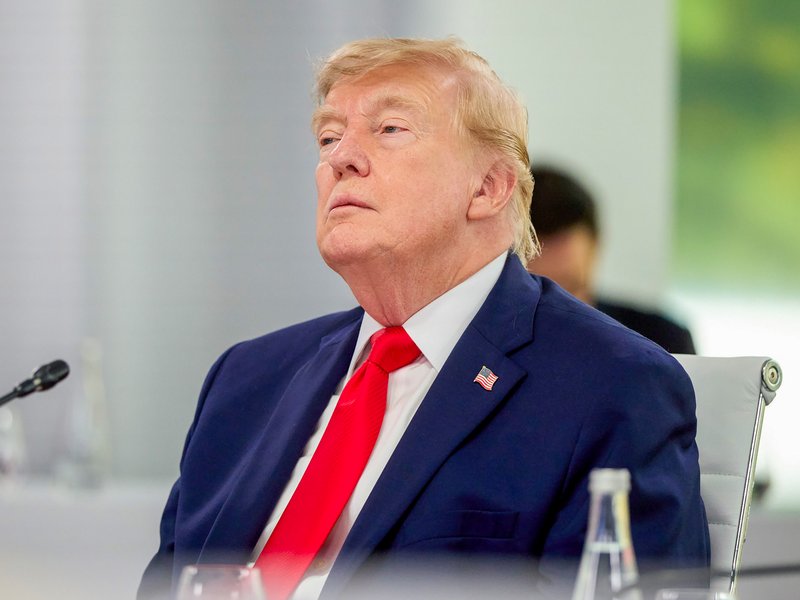
He stressed that over the past many decades, unlike other countries in the region, Iran remained largely beyond reach while navigating recurring conflicts with certain skill and developing its capabilities which were tested by the US President Donald Trump.
“In 38 days, Iran has been hit across an estimated 13000 targets, lost half its weaponry and 155 ships, with thousands killed, including children, in hundreds of schools. Iran, however, shocked Israel and America by destroying billion-dollar radar systems and THAAD missile systems and launching pinpoint attacks on American assets in the Gulf that wrecked a dozen bases and the CIA headquarters in the Riyadh embassy. Israel was stunned when Iranian missiles penetrated the ‘invincible’ Iron Dome over its cities and hit Dimona, home of Israel’s nuclear reactor and weapons. After 38 days, America froze,” wrote M J Akbar.
Stressing that the ceasefire is under negotiation and cracks appeared within a day of proclamations, he said, "But certain facts are incontrovertible. There has been no regime change in Tehran. Sanctions on Iranian oil have been lifted; India, for instance, made its first official purchase of Iranian oil since the sanctions began."
According to the seasoned journalist, the region is once again caught between “hoping for the best and preparing for the worst”, amid accusations that different versions of negotiation terms were presented to different parties.
He added that while Israel maintains that Lebanon is not included in the ceasefire, Iran insists otherwise.
“Fudge might take a process forward, but it is not a healthy input into a complex mix. Iran’s ten terms will not be easy to comply with. Iran wants a commitment on non-aggression, control of Hormuz, withdrawal of American forces from the region, reparations, the end of all sanctions, and its right to continue its nuclear programme for peaceful purposes. President Trump wants to define his version of victory, but is showing signs of flexibility even as he orders American military to reload and rest for the next battles. Simultaneously, he has said that America could split the Hormuz toll with Iran, making them partners on the water highway," he noted.
--IANS
scor/as