
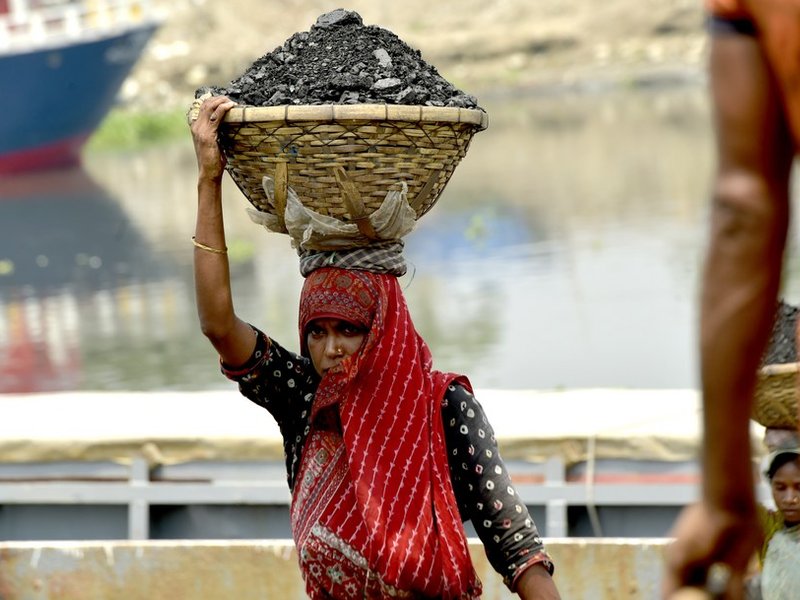
Dhaka, May 2 (IANS) Bangladesh's rural workforce continues to witness a significant wage disparity, with women earning less than their male counterparts despite undertaking identical tasks, according to a report.
Field observations and interaction with workers in the Thakurgaon district indicated that women are often paid lower wages than men despite working similar hours and putting in equal effort, according to a report in the leading Bangladeshi newspaper, The Daily Star.
During the conversation, 40-year-old Sumita Bala said that even after working "all day in the sun and rain", the female workers earn a maximum of Bangladeshi taka (Tk) 250-300 a day, whereas male workers receive Tk 400-500.
Another female worker, Nirmala Rani, while measuring and packing dried chillies into sacks, said, "It's the same work, yet the pay is lower."
On the other hand, 42-year-old Rehana Begum questioned, saying, "Do we work any less than men? Then why are we paid less?"
"Landowners say we (women) cannot perform all tasks like men, which is why our wages are lower," she added.
Afiya Begum, a housewife, said that women shoulder multiple responsibilities, from managing childcare and household chores to rearing livestock and assisting in agricultural work, but their contributions remain undervalued.
"Even in day labour at fields and farms, we are paid Tk 150 to Tk 200 less than male workers. No one, including the government, speaks about this. We are deprived in every way," The Daily Star quoted Arfiya as saying.
Highlighting that many women have come to accept the disparity as "normal", Nihar Rani said, "If we demand higher wages now, we may not get work at all."
In its 2025 quarterly report, the Bangladesh Bureau of Statistics (BBS) stated that the average daily wage in agriculture stood at Tk 625 for men and Tk 462 for women in December last year.
Muhammad Shahid Uz Zaman, Executive Director of the Eco Social Development Organisation (ESDO), said that despite their significant role, women continue to endure long working hours, lower wages, and persistent discrimination.
He said that inadequate monitoring of wage policies enables employers to exploit workers through lower pay, noting that such disparity weakens women's economic empowerment and discourages their involvement in agriculture.
Emphasising that women are engaged in more than half of agricultural activities, Md Mazedul Islam, Deputy Director of the Department of Agricultural Extension (DAE) in Thakurgaon, said that coordinated efforts are required to acknowledge their contributions and reduce wage gaps.
--IANS
scor/sd/