
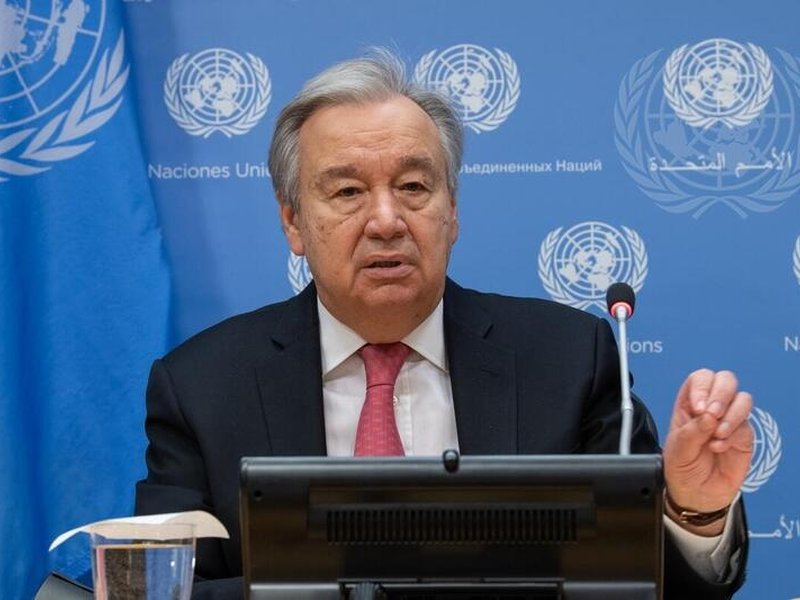
United Nations, April 2 (IANS) With a firm message to Israel, the United States, and Iran to immediately stop the conflict, Secretary-General Antonio Guterres on Thursday called for supporting diplomacy to stop the threatened “spiral of death and destruction”.
He told the media that he was “dispatching my Personal Envoy Jean Arnault to the region to support these efforts.”
The diplomatic efforts “to find a peaceful path forward”, he said, “deserve the space and support to succeed, anchored firmly in international law, including the UN Charter”.
Addressing the combatants, Guterres said, “My message is clear: To the United States and Israel, it is high time to stop the war that is inflicting immense human suffering and already triggering devastating economic consequences.”
And, “to Iran, to stop attacking their neighbours.”
When Guterres appointed Arnault, who had been handling Afghanistan diplomacy, to a role in the Iran conflict last month, he said he would support mediation efforts and reach out to all parties.
Again, underscoring the need for diplomacy, he said, “Conflicts do not end on their own. They end when leaders choose dialogue over destruction. That choice still exists. And it must be made – now.”
Guterres’ call for diplomacy runs up against the reality of the apparent stalemate in attempts at negotiations.
US President Donald Trump has repeatedly asserted that talks were taking place with a “more reasonable” group of Iranian leaders, whom he has not identified, but Tehran has denied any negotiations, saying only that some communications have been exchanged through intermediaries.
Trump threatened on Wednesday night to intensify attacks on Iran over the next two or three weeks and told the countries dependent on the energy resources from the Gulf to get the Strait open on their own.
About 40 countries attended a meeting on Thursday called by Britain on the Strait crisis.
Opening the meeting, Britain’s Foreign Secretary Yvette Cooper said they would seek “collective mobilisation of our full range of diplomatic and economic tools and pressures” to secure the Strait's opening.
The UN Conference on Trade and Development (UNCTAD) said on Wednesday that traffic through the Strait was down by over 95 per cent in the past month, disrupting energy and fertiliser flows.
Guterres said, “When the Strait of Hormuz is strangled, the world’s poorest and most vulnerable cannot breathe. We see it in the daily lives of people struggling with rising food and energy costs.”
One of Trump’s and Israel’s aims in the conflict is to stop Iran’s access to nuclear fuel, and its nuclear facilities have reportedly been attacked, and Iran’s missiles have hit Dimona, home to an Israeli nuclear research centre.
Guterres said, “Civilians and civilian infrastructure, including nuclear installations, must be respected and protected.”
--IANS
al/dan