
New Delhi, July 15 (IANS) In a series of social media posts on Wednesday, the Nationalist Citizens Party of India (NCPI) congratulated its Parliamentary party leaders after scoring one of the most stunning political realignments in modern Indian history by becoming a major force in the Lok Sabha overnight.
The Facebook posts came after the party having earlier declared Sudip Bandopadhyay as its Floor Leader, Shatabdi Roy Deputy Leader, and Kakoli Ghosh Dastidar the Chief Whip in the Lower House.
Soon after the switch, Sudip Bandopadhyay had announced that they would now represent the “real Trinamool” in Parliament, beginning with the Monsoon Session from Monday (July 20).
Meanwhile, the once-obscure NCPI, without contesting a single Lok Sabha election, has suddenly been catapulted into national prominence last month. This dramatic elevation was triggered when 20 dissident Trinamool Congress MPs, representing a two-thirds majority of its own strength in the Lok Sabha, declared their merger with the NCPI.
Incidentally, this party, with its registered headquarters in Kolkata, contested the Assembly elections in Tripura in 2023 and managed to secure a total of 822 votes.
But in the Parliament, the rebel Trinamool MPs helped the NCPI turn into the fifth-largest party in the Lok Sabha and the second-largest ally – after the Bharatiya Janata Party (BJP) itself – in the ruling National Democratic Alliance (NDA).
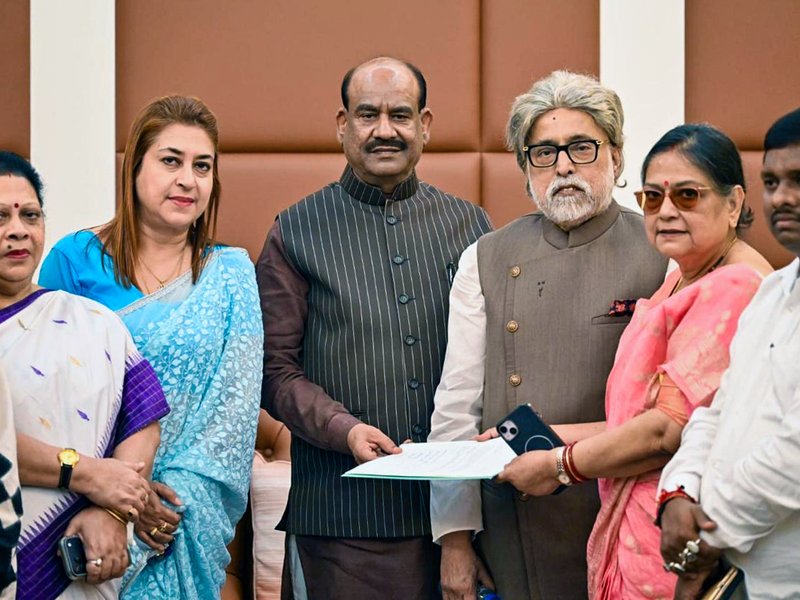
Among other larger NDA constituents, Andhra Pradesh’s Telugu Desam Party (TDP) has 16, and Bihar’s Janata Dal (United), 12 members. The “new NCPI MPs” have written to Lok Sabha Speaker Om Birla seeking recognition. They have also said that they wanted to extend support to the NDA in a significant shift from the Trinamool’s earlier stand.
Experts remain sharply divided on whether these MPs move shields the rebels from disqualification under India’s anti-defection law. In certain political circles, the move has met with criticism, being termed as a “shell-party” tactic, where the machinery of a minor, virtually unknown party is utilised as a vehicle for power and legal protection.
However, the rebels claim protection under Paragraph 4 of the Tenth Schedule, which exempts legislators from disqualification if two-thirds of a party’s lawmakers agree to a merger.
Legal opinions differ, with some contending the use of “party” in the relevant paragraph implying the organisation and not its lawmaker – even if they comprise over two-third strength of its total membership.
Overall, the incident has built up a debate on the contention that while it does legally bypass the rigours of India's anti-defection laws, it raises certain questions about the democratic process and the nature of voter representation.
The argument is based on the premise that a political party gains legislative power through the numbers in a voting machine only, not through such political manoeuvres, which allegedly build a disconnect between the elected and the electorate.
Last month, Trinamool Congress General Secretary and MP Abhishek Banerjee led a party delegation to meet the Lok Sabha Speaker and contest the legitimacy of the rebel faction. He urged Om Birla not to recognise the breakaway group that merged with the NCPI, seeking their disqualification under the Tenth Schedule of the Constitution.
At the time of writing, the Speaker had yet to grant official recognition and the Lok Sabha official website showing 28 seats for the Trinamool Congress. However, the “NCPI MPs” are confident that they will stand vindicated after scrutiny and have already set Sunday for a meeting of their “new Parliamentary party”.
--IANS
jb/uk