
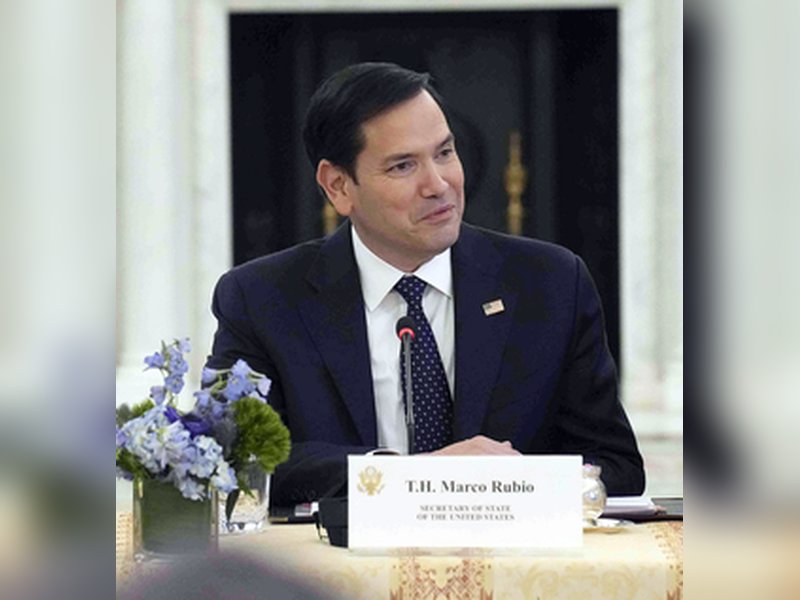
Washington, March 27, (IANS) The United States has warned that any move by Iran to impose a tolling system in the Strait of Hormuz would be “illegal” and “dangerous,” signalling early concern over a potential escalation affecting global shipping lanes.
Secretary of State Marco Rubio said one of the immediate challenges after the current phase of tensions could be Iran attempting to control access through the strategic waterway.
“One of the immediate challenges we're going to face is an Iran that may decide that they want to set up a tolling system in the Straits of Hormuz,” Rubio said.
He described such a move as unacceptable and a threat to global stability.
“Not only is this illegal, but it's unacceptable. It's dangerous for the world,” he said, stressing that international coordination would be essential to counter any such development.
Rubio said the United States was already engaging with allies and partners on a potential response framework.
“And it's important that the world has a plan to confront it. The United States is prepared to be a part of that plan,” he said.
He indicated that Washington does not necessarily need to lead such an effort but would actively participate alongside other nations with stakes in the region.
“We don't have to leave that plan, but we're happy to be a part of it,” Rubio said, adding that the burden should be shared more broadly.
The Secretary pointed to the wide range of countries that rely on the Strait of Hormuz, underlining that the issue extends far beyond Western economies.
“These countries have a lot at stake, not just the G7 countries, but countries in Asia and all over the world have a lot at stake and should contribute greatly to that effort,” he said.
Rubio also warned against allowing any nation to exert unilateral control over critical international waterways.
“To ensure that neither the Straits of Hormuz nor frankly any international waterways should ever be something that's controlled or told by a nation state or by a terroristic government like the one that exists in Iran today in that radical clerical regime,” he said.
He added that there appeared to be growing agreement among partners on the need to address the issue collectively.
“So there seemed to be a lot of buy-in to that,” Rubio said.
--IANS
lkj/dan