
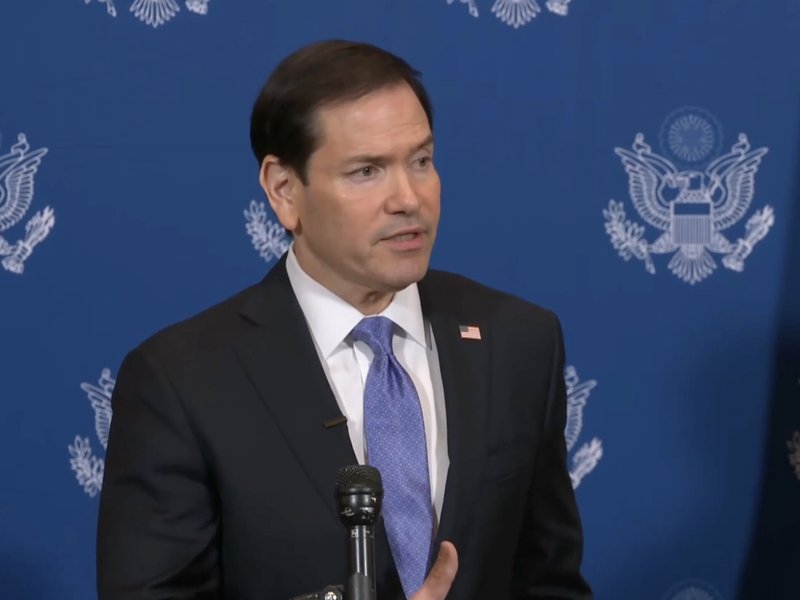
Washington, Sep 28 (IANS) The United States will restrict visas for people who obstruct the resolution of international parental child abduction cases, Secretary of State Marco Rubio announced on Monday. The policy can also cover their immediate family members.
Rubio said the measure is aimed at people responsible for, or complicit in, delaying efforts to return abducted children to their country of habitual residence. It gives the State Department another way to pressure countries that fail to meet their obligations, he said.
The statement named foreign government officials, judges, judicial administrators and law enforcement officials among those who could obstruct a case. It also referred to “others” whose actions prolong a family’s separation.
“Protecting American children abducted across international borders and reuniting them with their parents is a top priority for the Trump Administration,” Rubio said. He said officials who intentionally obstruct a prompt resolution “prolong family separations and block the return of children to the United States.”
The policy covers people who intentionally fail to implement or comply with laws, policies or court orders intended to resolve such cases and return children to their country of habitual residence, according to the statement. It targets conduct that impedes a resolution, rather than naming a particular country or dispute.
Rubio described the restrictions as “a new accountability tool to press non-compliant countries to meet their obligations.” His statement did not identify any country, official or individual facing a restriction. It also did not say whether visas had already been denied under the new policy.
Including immediate family members broadens the measure's reach beyond those accused of obstructing a case.
The department already works to prevent international parental abductions and to facilitate the quick and safe return of abducted children, Rubio said. The visa policy adds a way to seek accountability when countries fail to meet their obligations under international law, according to his statement.
“We are committed to protecting the safety and well-being of all American children,” Rubio said.
The State Department said it is taking the action under Section 212(a)(3)(C) of the Immigration and Nationality Act. Rubio’s announcement concerns visa issuance; it does not describe a new procedure for deciding custody or ordering a child’s return.
In an international parental child abduction case, the country where a child habitually lived is a central issue. A request for the child’s return and a decision about long-term custody are distinct matters. Disputes can involve parents and authorities in more than one country.
The Hague Convention on the Civil Aspects of International Child Abduction provides a framework for seeking the prompt return of children across participating countries.
--IANS
lkj/ksk/dan