
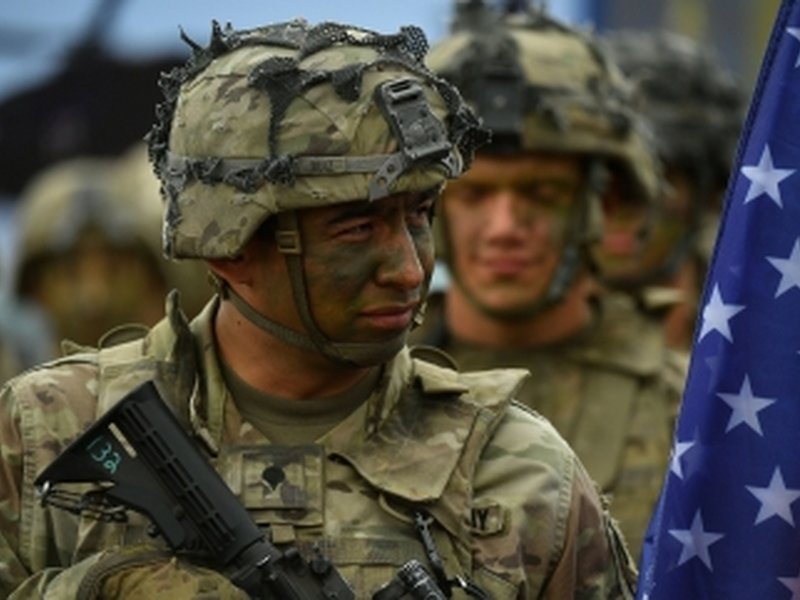
Washington, April 9 (IANS) The United States will maintain full military readiness in the Middle East despite a two-week ceasefire with Iran, the White House said, signalling that Washington is prepared for a rapid escalation if negotiations falter.
Officials said no immediate drawdown of US forces is planned, even as diplomatic efforts begin following weeks of intense military operations.
Asked what to expect from US troops during the ceasefire window, a reporter queried: “What we should expect from U.S. troops in theatre for the next two weeks and beyond?”
White House Press Secretary Karoline Leavitt said the administration is taking a cautious approach.
“We're not going to move anything immediately… in the meantime, we're going to ensure that our military is always at the ready of the commander in chief,” she said.
She referred operational specifics to the Pentagon but made clear that US forces will remain in place as negotiations proceed.
The posture reflects concerns within the administration that the ceasefire could break down, particularly given ongoing regional tensions and uncertainty over Iran’s internal command structures.
“This is a fragile truce. Ceasefires are fragile by nature,” Leavitt said, warning that implementation could face disruptions in the coming days.
The ceasefire, announced after 38 days of US military operations against Iran, has opened a two-week diplomatic window aimed at securing a longer-term agreement.
However, Washington has emphasised that military preparedness remains central to its strategy, both as a deterrent and as leverage in negotiations.
The White House has argued that sustained military pressure forced Iran to accept the ceasefire in the first place.
“The President’s maximum pressure and the leverage created by the success of Operation Epic Fury led to the Iranian regime asking for and ultimately agreeing to a ceasefire proposal,” Leavitt said.
At the same time, officials acknowledged that the operational impact of US strikes on Iran could complicate the ceasefire’s early stages.
One reporter raised concerns about reports of renewed activity inside Iran, asking about explosions and air defence activation in multiple cities.
Leavitt said she had not yet verified those reports but pointed to a broader issue.
“One of the results of Operation Epic Fury was that we completely dismantled Iran's command and control center, which makes it difficult for them to pass messages up and down the chain,” she said.
The disruption, she suggested, could affect Iran’s ability to coordinate compliance with the ceasefire, at least in the short term.
The administration has also said that many of Iran’s remaining leaders are operating under constraints following the strikes, further complicating internal coordination.
In addition to military effects, questions were raised about the political consequences inside Iran, particularly whether the conflict had led to greater freedoms for its population.
Asked directly whether “regime change has led to more freedoms for the Iranian people,” Leavitt said it was too early to draw conclusions.
“I think that's a question that's being asked a little bit too early… " It's something that has yet to be seen,” she said.
--IANS
lkj/dan