
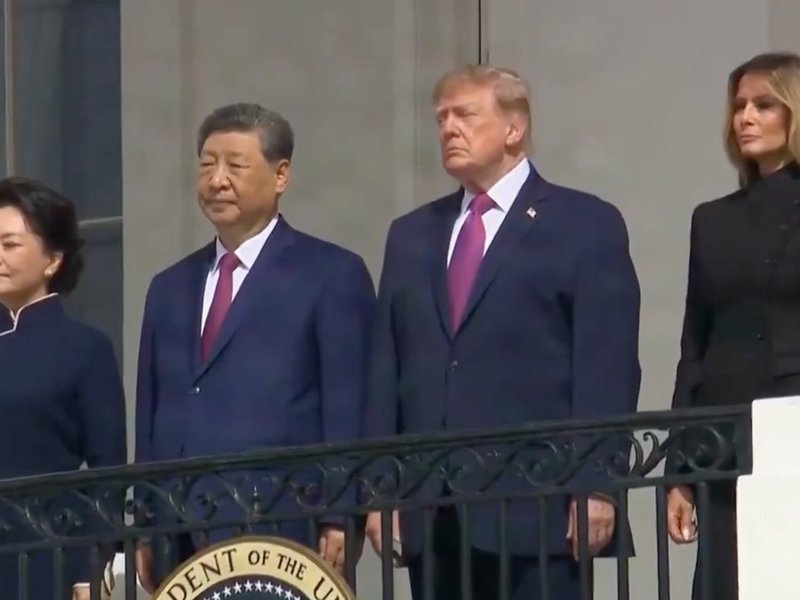
Washington, Sep 24 (IANS) US President Donald Trump and his Chinese counterpart Xi Jinping spoke warmly about friendship and cooperation at the White House on Thursday. Their welcoming speeches offered a way to manage the US-China rivalry. They gave little indication that either leader was ready to settle their hardest disputes.
Trump praised their personal relationship and said the visit would cover trade, security and technology. Xi called for steady dialogue, fair treatment of Chinese companies in the United States and regular contact between the two militaries. He also announced an invitation for 100,000 young Americans to visit China over five years.
Those proposals are steps in the right direction. More contact can reduce the risk of a misunderstanding, and talks can produce agreements in areas where both sides see a benefit. But the speeches did not explain what either country would give up to secure broader cooperation.
The most striking omission was Taiwan. Neither leader mentioned it in the welcoming remarks, although Xi had described it as the most important issue in US-China relations during their talks in Beijing in May. Its absence from a public ceremony does not mean it will be absent from their private discussions.
Trump spoke of greater access to China’s market for American farmers and ranchers. Xi said American businesses were welcome in China and asked that Chinese companies be treated fairly in the US. Neither set out new terms on tariffs, investment or the restrictions that affect trade in advanced technology.
Technology exposed a similar gap. Trump said the leaders would discuss “superintelligence”. Xi urged them to develop AI for the public good and keep it under human control. Neither described how they might reconcile cooperation in AI with national security concerns about the technology and the chips used to develop it.
On military matters, Xi offered the clearest risk-reduction proposal. “China and the United States must hold the line of no conflict and no confrontation between us,” he said. He called for regular military dialogue and better crisis communication. The speech gave no timetable or details of a new arrangement.
The distinction is between slowing a crisis and ending a rivalry. The first may be possible even when the two governments disagree sharply. The second would require difficult decisions on security, technology and trade that neither president made in public on Thursday.
The White House said its May agreement with China created boards for trade and investment and addressed matters including agricultural access and rare earths. US export rules also continue to govern sales of certain advanced semiconductors to China. Those policies provide concrete measures against which to judge any new announcement.
The US national security strategy describes a continuing strategic competition and calls for peace and stability across the Taiwan Strait. That wider policy setting explains why a successful state visit could improve cooperation in specific areas without ending the competition between the two countries.
--IANS
lkj/ksk/dan