
Seoul, June 29 (IANS) South Korea plans to develop a new semiconductor production base in the country's southwestern region through 800 trillion won ($517.9 billion) in corporate investments that will create four memory chip fabrication plants, Industry Minister Kim Jung-kwan said on Monday.
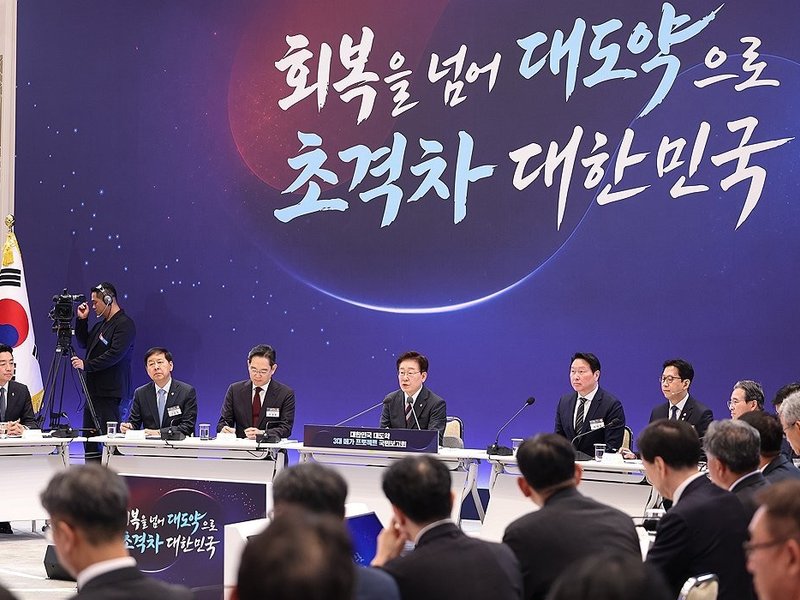
Kim unveiled the investment plan to transform the Gwangju and Jeolla regions into the nation's second major semiconductor cluster, alongside the existing hub in the Seoul metropolitan area, during a national investment briefing chaired by President Lee Jae Myung at Cheong Wa Dae.
"Relying on a single production base in the Seoul metropolitan area is no longer sufficient to meet surging semiconductor demand," Kim said, noting that constraints on power and water resources limit further expansion under existing plans, reports Yonhap news agency.
The semiconductor investment is part of the government's "three mega projects" initiative, which calls for large-scale investments by chip giants Samsung Electronics Co. and SK hynix Inc., as well as other companies, in semiconductors, physical artificial intelligence (AI) and AI data centres.
Kim said the Chungcheong region will be developed into an advanced semiconductor packaging hub through 81 trillion won in investment to meet growing packaging demand as chip production expands, while the Daegu and North Gyeongsang regions will be fostered as innovation hubs for semiconductor materials, components and equipment.
He added that the government will help companies accelerate semiconductor investment by bringing forward the construction schedule for new fabrication plants by as much as 12 years, from the mid-to-late 2040s to the mid-2030s.
To support the expansion, the government vowed to streamline permits and construction procedures while investing in critical infrastructure, including electricity and industrial water supplies.
At the meeting, attended by Samsung Electronics Chairman Lee Jae-yong and SK Group Chairman Chey Tae-won, Kim outlined a government-industry plan to invest 30 trillion won over the next 15 years to support the entire semiconductor value chain, from research and development and chip design to testing and manufacturing.
The ambitious industrial blueprint is aimed at transforming the country from a global manufacturing powerhouse into a leader in the artificial intelligence era, anchoring its strategy on semiconductors, AI infrastructure and physical AI.
For the robotics sector, Kim said the government will foster an AI-powered robotics industry to strengthen South Korea's manufacturing competitiveness in the intensifying global competition.
Kim warned that China has already begun mass-producing humanoid robots through regional manufacturing hubs, underscoring the need for South Korea to accelerate the commercialization and mass production of its own humanoid robots.
"We must accelerate the foundation for mass production," Kim said, adding that the government plans to create early domestic demand by procuring humanoid robots for education, defence and disaster response.
The initiative aims to raise South Korea's share of the global humanoid robot market from just 1 percent last year to 20 percent over the long term.
As the third pillar of the strategy, the government unveiled an ambitious plan to expand the nation's AI data centre infrastructure.
Working with SK Group, GS Group and portal operator Naver, the government plans to invest approximately 550 trillion won by 2029 to build AI data centres with a combined capacity of 8.4 gigawatts (GW). Total investment is expected to exceed 1,000 trillion won by 2035, expanding capacity to 18.4 GW.
To support the initiative, the government pledged to ensure adequate supplies of electricity and industrial water, and strengthen power infrastructure around existing semiconductor clusters.
--IANS
na/