
Islamabad, Sep 22 (IANS) Residents in Pakistan-occupied Kashmir (PoK) have been facing an internet shutdown for more than 100 days with the disruption impacting banking, business, education and access to information, a report has detailed.
Mobile data and broadband services have remained suspended or severely restricted in PoK since June 5, after protests led by the Jammu Kashmir Joint Awami Action Committee (JKJAAC) started in the occupied territory. Internet disruption continues in PoK even after the completion of electoral process, having severely afftected online banking, commercial activity and even entrance examinations for students having been postponed, a report in Greece-based Geopolitico mentioned.
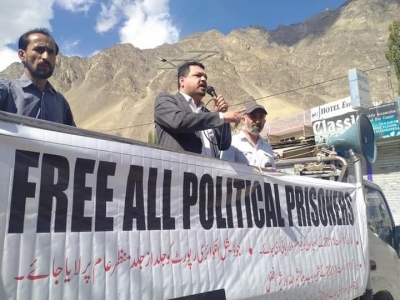
PoK is witnessing the most extensive confrontation between the local population and the Pakistani state in decades, with deadly violence, suspension of the internet, and police brutality. The protests, which initially began over increasing prices of electricity and essential commodities, transformed into a movement calling for political reforms, greater accountability, and representative government. Several videos posted on various social media handles, including that of the JKJAAC, have shown the massive brutality of Pakistani forces in PoK over the past many months.
Voting for the so-called polls conducted in PoK did not take place or remained disrupted in protest strongholds for security reasons. A so-called "government" was formed in PoK based on results from the voting in the remaining constituencies of PoK. However, the internet services remain suspended in PoK even after the completion of the electoral process, the Geopolitico report mentioned.
"What began as an emergency measure amid protests and electoral tensions has continued into a fourth month, affecting everyday life far beyond the political confrontation itself. Human rights organisations are calling for communications to be restored, independent journalists to be allowed access, allegations of excessive force to be investigated and political grievances to be addressed through dialogue rather than coercive measures," the report stated.
"For residents, however, the immediate reality remains unchanged: more than 100 days after the blackout began, large parts of Pakistan-administered Kashmir remain cut off from normal digital communications, while the full human cost of the unrest is still difficult to independently establish," it added.
Last month, the Human Rights Commission of Pakistan (HRCP) said the recent unrest in PoK resulted from longstanding political and socioeconomic grievances, institutional distrust and governance deficits and an increasingly confrontational state response, including the disproportionate use of force.
In its fact-finding report 'Civic Spaces under Strain' in PoK, the HRCP said, "While accounts differed sharply on the nature of JAAC, the scale and causes of violence, and the conduct of security forces, there was broad recognition among political and community stakeholders that the underlying grievances required a political response. The resort to coercive measures in place of sustained dialogue appears to have deepened polarisation and eroded public trust."
The HRCP stated that the unrest had implications for various rights and freedoms beyond the elections, including the rights to life, liberty and security of person; freedom of expression, peaceful assembly and association; freedom of movement; access to information; and participation in public affairs. It said that the prolonged internet and mobile shutdowns, restrictions on movement, disruption of access to essential commodities and healthcare, arrests of activists and journalists and the use of anti-terrorism and other detention provisions narrowed civic space in PoK.
The HRCP expressed concerns over allegations of the use of lethal and excessive force against protesters in PoK. It said that the authorities provided figures regarding security personnel casualties. However, the mission did not receive information on civilian deaths and injuries. According to the report, the HRCP received multiple accounts alleging that protesters had been killed or seriously injured by security forces but could not independently verify their full scale or circumstances, especially in Rawalakot, as the region was inaccessible.
It said that the restrictions on journalism and access to information further constrained civic space in PoK. Arrests and legal action against journalists, restrictions on access to impacted areas, special security requirements and the prolonged communications shutdown severely restricted independent reporting in PoK, according to the report.
--IANS
akl/as