
Canberra, May 30 (IANS) The outcomes of the Quad meeting in New Delhi have opened new avenues for deepening bilateral cooperation between Australia and India. The joint condemnation of last year's horrific terror attacks at Bondi Beach in Australia and Pahalgam in Jammu and Kashmir reflected the growing strength of the relationship between the two countries. This groundwork will shape the agenda for Prime Minister Narendra Modi’s planned upcoming visit to Australia, a report has highlighted.
According to a report in Australia-based ‘The Interpreter', the Quad appears to be addressing its earlier limitations by seeking to “institutionalise forms of cooperation that can outlast individual leaders and electoral cycles”. China’s criticism of the grouping as “cliques” engaged in "exclusionary" geopolitics, it said, underscored the extent to which the grouping unsettled Beijing.
The report noted that many of the initiatives and outcomes emerging from the Quad meeting align closely with the broader India–Australia partnership.
“The Quad Critical Minerals Framework, which explicitly covers mining, processing and recycling, is perhaps the most consequential development for Canberra and New Delhi. China’s suspension of rare earth and semiconductor mineral exports during the recent US-China tensions gave the framework fresh urgency," the report detailed.
“Australia and India had already signed critical minerals agreements, identified projects and convened investment forums. Yet the processing stage – where China dominates – has remained undeveloped. For the first time, the framework formally recognises all three stages of the supply chain and introduces private-sector coordination into the architecture. That makes it less declaratory and potentially more operational," it added.
Emphasising that defence cooperation remains another area where Quad initiatives align with the agenda for India-Australia ties, the report said that the proposed Quad Indo-Pacific Maritime Security Coordination mechanism builds on these bilateral efforts by incorporating real-time operational information sharing into the existing Indo-Pacific Maritime Domain Awareness framework.
“It also expands the role of India’s Information Fusion Centre–Indian Ocean Region (IFC-IOR) as the central coordinating node for regional maritime awareness. That falls neatly within the proposed Joint Roadmap for Maritime Security Collaboration announced during the India-Australia Defence Policy Talks earlier this year. Both Australia’s National Defence Strategy and India’s Maritime Doctrine emphasise bridging operational gaps across the Indian Ocean region,” The Interpreter mentioned.
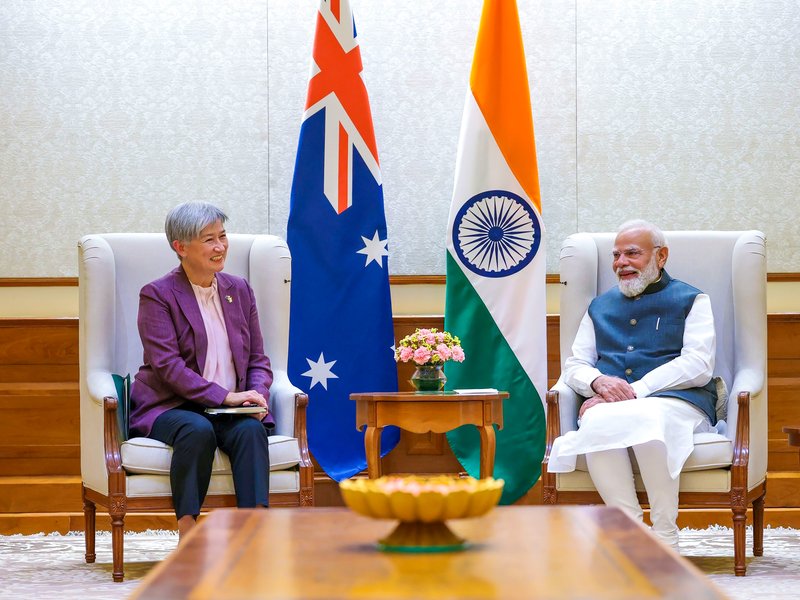
Underscoring the pace of engagement between Australia and India, Australian Foreign Minister Penny Wong said her meeting with External Affairs Minister (EAM) S. Jaishankar in New Delhi this week was their 28th in-person meeting since she assumed office four years ago.
"So we have spent a lot of time together, which reflects the importance of the partnership between our countries, as well as our personal friendship,” Wong stated.
--IANS
scor/as