
Islamabad, March 30 (IANS) Amid the ongoing conflict in West Asia, Pakistan is actively seeking to project itself as a mediator, a reflection of the pressures and constraints it faces, both external and internal, according to a report.
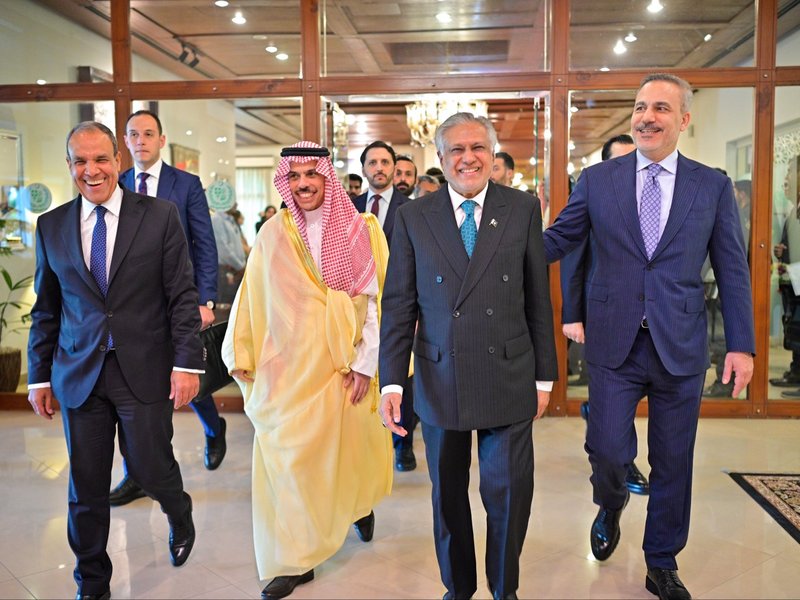
A meeting was recently held in Islamabad, which witnessed the participation of Turkey, Egypt, and Saudi Arabia. However, the actual parties to the conflict - Israel, the US, and Iran were not part of the meeting. This portrayal of Pakistan as a potential mediator must be seen in the broader strategic context, according to a report in Hong Kong-based Asia Times.
The US initially expected the war to be short and decisive; however, it has turned out to be far more complex and prolonged. Iran has targeted military installations, commercial and energy interests. Energy prices have increased as the Strait of Hormuz has been blocked and global oil supplies have been disrupted.
In such a scenario, the US and its allies seem to find an exit, concerned about being drawn into another prolonged war in the region. Several Gulf nations cannot play the role of mediator, as countries like Qatar, Oman, and Bahrain are parties to the conflict since Iran has carried out missile and drone strikes targeting their territory. This makes them active stakeholders instead of neutral actors.
"It is within this context that Pakistan is being brought in and projected as a mediator. The question is: why Pakistan? The answer lies not in Pakistan’s growing independent global stature but in a combination of strategic convenience and Pakistan’s own compulsions," Imran Khurshid mentioned in the report.
First, Pakistan recently signed a mutual defence agreement with Saudi Arabia, which includes a North Atlantic Treaty Organisation (NATO)-like clause under which an attack on one of the nations is considered an attack on both. If the war continues, Pakistan might have to enter the war on Saudi Arabia's side, creating urgency for Islamabad to stop escalation. Second, internal dynamics of Pakistan are sensitive as several segments of its population, especially the Shia community, sympathise with Iran. Protests erupted across Pakistan following the killing of Iran's Supreme Leader Ayatollah Ali Khamenei.
Third, Pakistan shares a border with Iran, and any instability on the Iranian side could increase insurgency challenges for Pakistan, according to the Asia Times report. Fourth, Pakistan’s economic vulnerability as a country is heavily reliant on external financial assistance, including International Monetary Fund (IMF) bailouts and support from Gulf nations.
"Taken together, these factors explain why Pakistan is actively seeking to position itself as a mediator — a reflection of the pressures and constraints it faces, both external and internal. The broader narrative of Pakistan’s growing role in global diplomacy, therefore, needs to be treated with caution. Visibility does not automatically translate into influence. Being in the limelight during a crisis is not the same as possessing sustained diplomatic weight or independent strategic agency. One should not forget that Pakistan has often functioned as a close though subordinate ally of the US in pursuing regional objectives. Any assessment of its role must take this into account, as Pakistan has frequently operated within externally shaped frameworks — from Afghanistan to the broader West Asian landscape," Khurshid noted.
"These current mediation efforts illustrate this dynamic. Tweets by Pakistani leaders, including Prime Minister (Shebaz) Sharif and Foreign Minister Ishaq Dar, are being actively shared by Donald Trump on his Truth Social account — a relatively rare occurrence — signaling alignment with US objectives. At the same time, while Pakistan speaks of mediation, it has not halted its military operations in Afghanistan, raising questions about its credibility. Recent strikes that reportedly hit civilian infrastructure, including hospitals, have resulted in more than 400 deaths, further complicating its claim to impartial mediation," he added.
--IANS
akl/vd