
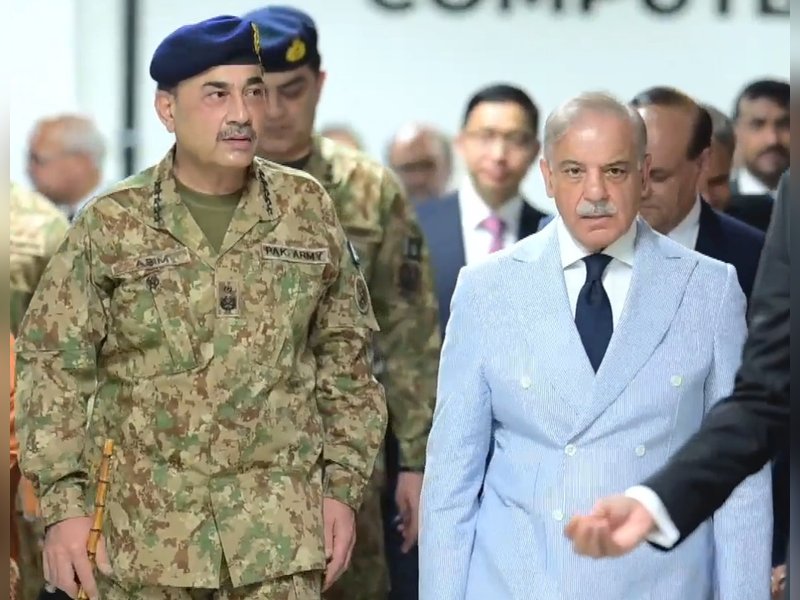
Athens, Oct 31 (IANS) Pakistani Army chief Asim Munir’s “hard-state” doctrine rests on the assumption that resistance stems from a lack of force, a report has stated.
It argued that Khyber Pakhtunkhwa province would be a critical test of that strategy, given its population of more than 40 million, deeply entrenched political organisation, an armed insurgency already operating across the province, and a border with a hostile Afghanistan.
According to a report in 'Greek City Times', the extraction of critical minerals in Khyber Pakhtunkhwa is also unlikely to advance at the expected pace, with geological reserves yet to be established, processing capacity largely absent and security conditions continuing to deteriorate.
Meanwhile, the worsening security situation could prompt Pakistan’s military establishment to seek increased federal funding for security operations while tightening its control over the province’s mineral wealth and potentially selling the resources to Western buyers, it stated.
“Many people are asking whether Islamabad suspended an elected provincial government to seize its mineral wealth. The evidence is more damaging than the speculation: the constitutional machinery activated in Khyber Pakhtunkhwa on 11 October 2026 dissolves the obstacle that had blocked federal control of the province’s minerals for at least 18 months. Under Articles 232 and 234, the federal government, backed by the military establishment, assumed emergency powers and governor’s rule; federal law now prevails wherever it conflicts with provincial law, and the military took Chief Minister Sohail Afridi into ‘preventive’ custody,” the report detailed.
“Notably, minerals are a provincial subject under Pakistan’s Eighteenth Amendment. The province no longer has a legislature capable of exercising that right, and the suspicion now circulating across Pashtun political networks is a rational response to that sequence rather than a conspiracy theory,” it added.
The report warned that the security consequences of Pakistan’s manoeuvre in Khyber Pakhtunkhwa would far outweigh any revenue it generates for the state.
It noted that police fatalities rose to 122 in the first half of 2026, compared with 63 during the same period a year earlier, while violence-linked deaths increased to 556 between July and September from 475 in the previous quarter. Islamabad cited the deteriorating security situation to justify imposing the emergency in Khyber Pakhtunkhwa.
“Removing the only elected tier of government that retained legitimacy among Pashtuns, arresting its chief minister, and opening the province’s resources to federal and foreign disposal will not reverse that trend. It hands militant groups a grievance narrative requiring no exaggeration, and it repeats in Khyber Pakhtunkhwa the dynamic that made Balochistan ungovernable,” the report noted.
--IANS
scor/as