
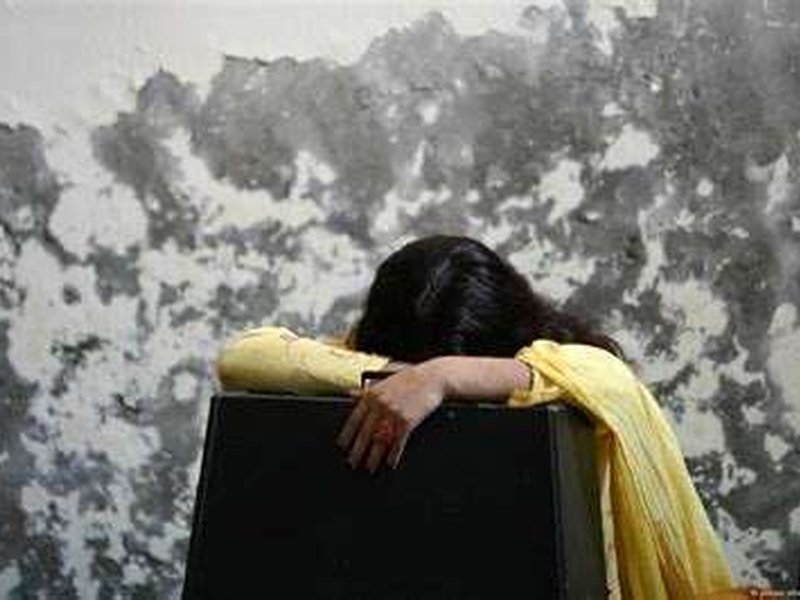
Islamabad, Nov 24 (IANS) The murder of a 13-year-old girl named Fatima Asghar in Pakistan's Islamabad exposes a deeply entrenched social and economic system, where children from poor families are treated as commodities, their labour exploited and their lives considered expendable, a report has detailed.
Asghar's killing must become a turning point in Pakistan's treatment of domestic workers as she is not the first one, as hundreds of other young girls, including Kaneez Fatima, Iqra, Fatima Furiro, Zohra Bibi, Rizwana, have been murdered in Pakistan. These deaths spark questions over child labour, bonded employment, the invisibility of poor families and the failure to enforce laws that are meant to protect the most vulnerable, former member of Pakistan's National Assembly, Mehnaz Akber Aziz, wrote in an opinion piece for leading Pakistani daily 'The News International'.
"Fatima Asghar’s death is a reflection of a deeply entrenched social and economic system in which children from the poorest households are treated as commodities, their labour exploited and their lives considered expendable," The postmortem report revealed that her body had around 20 injuries, including old wounds, untreated injuries, infections and burn marks reportedly due to the use of a heated iron. Fatima Asghar's medical findings have revealed repeated physical assaults and severe trauma. Two suspects have been arrested, and an investigation must be conducted to bring the perpetrator to justice," opined Aziz.
"But we must ask a much bigger question: how many other children like Fatima are living behind the closed doors of affluent households across Islamabad and Pakistan, facing violence, exploitation and abuse without anyone knowing?," Aziz added in The News International.
Domestic workers account for 13.2 per cent of working children aged between five and 17 years, according to the National Commission on the Rights of the Child’s State of Children in Pakistan 2025. Among them, 33.5 per cent are girls, highlighting the serious vulnerability of girls. The NCRC noted that domestic work remains underreported in Pakistan.
In June, a national report launched by the National Commission for Human Rights (NCHR) in collaboration with the United Nations Children's Fund (UNICEF) said that 8.6 million children are engaged in child labour in Pakistan, with more than 6.6 million involved in hazardous labour that poses a threat to their health, safety and future.
The report 'Pakistan: Child Labour Surveys, Evidence for Action' was the first nationally representative child labour data set in nearly 30 years and provided details regarding child labour in the country, including distribution, sectors, risks and drivers of child labour, another Pakistani daily Dawn reported.
At the launch of the report, NCHR Chairperson Rabiya Javeri Agha stated that hazardous child labour impacted children in every region of Pakistan. According to the report, Punjab had the highest number of children involved in child labour, with more than six million, followed by 1.6 million in Sindh, 745,155 in Khyber Pakhtunkhwa, 201,352 in Balochistan and 15,180 in Islamabad Capital Territory.
According to the report, poverty was the main cause of child labour, with the highest prevalence among the poorest households and families where parents were less educated, Dawn reported. Boys were significantly more likely than girls to have been involved in labour, including hazardous work.
--IANS
akl/as