

Washington, April 15 (IANS) Global financial markets have remained resilient despite volatility triggered by the Middle East conflict, the International Monetary Fund said and warned that rising debt levels and limited policy space could amplify risks if conditions worsen.
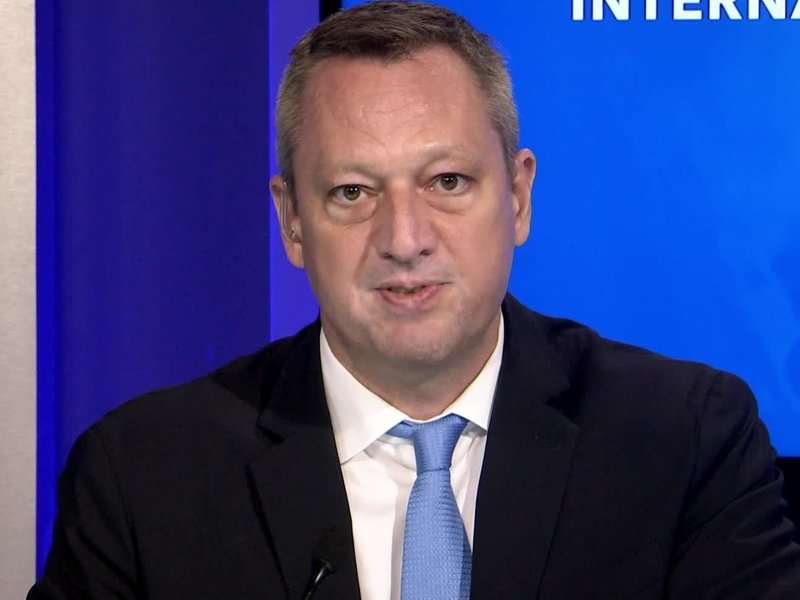
Presenting the latest Global Financial Stability Report, IMF Financial Counsellor Tobias Adrian said markets have so far absorbed geopolitical volatility without major disruption. “The financial system has been resilient so far,” he said, noting that markets have functioned “in an orderly manner” despite episodes of escalation and de-escalation in the conflict.
Adrian said the war has led to “bouts of volatility” but not the sustained stress seen in past liquidity crises. There have been no widespread margin calls or forced deleveraging, and banks remain “well capitalised and liquid”.
However, he cautioned that resilience is not guaranteed. Elevated public and private debt, rollover risks, and the growing role of non-bank financial institutions are key vulnerabilities that could destabilise markets. “The resilience is not assured in all states of the world,” he said.
A central concern flagged by the IMF is the limited policy space available to governments after years of crisis support. “The policy space has been drawn down in many countries,” Adrian said, urging policymakers to closely monitor risks and remain ready to inject liquidity if needed.
The conflict has also pushed up oil prices, feeding into inflation expectations globally. Adrian said the initial impact has been a rise in inflation expectations, though markets currently see this as temporary. “Inflation expectations remain well anchored further out into the future,” he said, suggesting the shock is not yet seen as persistent.
This outlook has implications for central banks. The IMF said policymakers may prefer a “wait and see” approach given uncertainty over how long the energy shock will last. “The option value of waiting in many cases is high,” Adrian said, though some central banks may still tighten policy depending on inflation dynamics.
Emerging markets face additional pressures, particularly from volatile capital flows and higher energy costs. Non-bank financing flows dominate in many such economies and are sensitive to shifts in global risk appetite. At the same time, vulnerable populations are already feeling the impact of rising energy and food prices, IMF officials noted.
Despite these challenges, emerging markets have shown relative resilience so far, supported by credible monetary policies. “Emerging market… has been fairly resilient through this period so far,” an IMF official said, adding that central banks must act decisively if inflation pressures intensify.
The report also highlights risks linked to artificial intelligence, particularly cybersecurity threats. The IMF warned that AI can be “used for good and for bad”, calling for stronger regulatory frameworks and operational readiness to address potential threats to financial stability.
On private credit markets, the IMF said risks appear contained for now, even under stress scenarios. Default rates could rise but remain manageable, while mechanisms such as redemption gates in funds help limit systemic spillovers.
Overall, the IMF stressed that while financial markets have weathered recent shocks, the combination of geopolitical tensions, high debt levels and constrained policy space leaves the global system exposed to future stress.
--IANS
lkj/rs