

Washington, May 2 (IANS) The Arabian Sea, the Strait of Hormuz, and the Red Sea form a connected maritime network that sustains critical global flows, where disruption in one part can trigger cascading effects across the entire system.
The closure of the Strait of Hormuz disrupts global energy markets, instability in the Red Sea complicates the re-routing of shipping routes and intensifies pressure on alternative corridors, while maritime infiltration exposes vulnerabilities in coastal urban hubs, a report has detailed.
According to a report in the US-based news website ‘Homeland Security Today’, this interconnectedness highlights the need to view maritime space not as fragmented regions but as a single integrated infrastructure environment.
Within this landscape, the critical flows underpinning economic and political stability are increasingly targetted by both state and non-state actors.
“The Arabian Sea and its connected waterways form one of the most critical infrastructure corridors in the global system. Linking the Strait of Hormuz to the Red Sea and onwards to the Suez Canal, this maritime space underpins the movement of energy, goods, and data between Asia, the Middle East, Africa, and Europe. It is not simply a geographic expanse but an integrated system of critical infrastructure flows and, increasingly, a focal point of modern conflict," the report mentioned.
“Recent developments demonstrate that this system is being targetted in distinct but interconnected ways by state actors, proxies, and terrorist organisations. These threats can be understood through three models: chokepoint disruption, maritime infiltration, and persistent maritime insecurity. Taken together, they illustrate how the maritime domain has evolved into a central arena for infrastructure-focused competition," it added.
The report stressed that the most immediate and globally significant example of maritime infrastructure targetting is the crisis in the Strait of Hormuz.
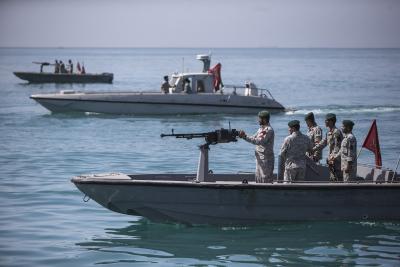
This narrow channel, connecting the Persian Gulf to the Gulf of Oman, has drawn intense international attention since the United States and Israel launched military action against Iran in February 2026. In the wake of escalating hostilities, Iran began targetting "enemy" merchant vessels transiting the strait.
“These actions were not isolated incidents but part of a broader strategy that effectively rendered the waterway unsafe for all shipping. The result was a near-total halt in maritime traffic, with vessels stranded and unable to pass through the chokepoint,” the report mentioned.
Another dimension of maritime threat, it said, is more covert but equally consequential. It stated that Pakistan-based terrorist groups have demonstrated how the maritime domain can be used as a route of access, enabling attacks on land-based infrastructure.
Emphasising the broader implications, the report said, “Taken together, the maritime domain is no longer peripheral to security analysis. It is a central component of critical infrastructure and a key arena in the evolving dynamics of both state and non-state conflict.
--IANS
scor/as