
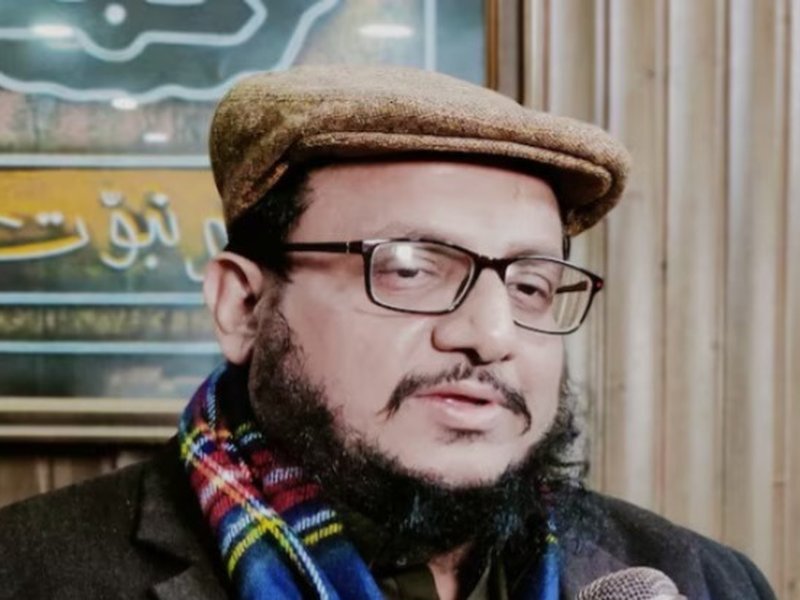
Tel Aviv, March 26 (IANS) The recent speeches in Pakistan's Lahore by Talha Saeed, son of UN-designated terrorist Hafiz Muhammad Saeed, alongside terror group Lashkar-e-Taiba figure Saifullah Qasur, are not isolated incidents but reflect a broader pattern. It underscores how Jihadist narratives are repackaged for a broader audience, linked to global conflicts, and amplified through increasingly visible platforms.
Writing for ‘Times of Israel’, Sergio Restelli, an Italian author and geopolitical expert, noted that at a crowded Eid gathering at Shalimar Bagh in Lahore, Talha Saeed addressed a receptive audience with a message that should raise concern far beyond the South Asian region.
“Calling for jihad against India and Israel, he framed the struggle not as a local grievance but as part of a wider civilisational confrontation. Beside him, Lashkar-e-Taiba figure Saifullah Qasuri pushed the rhetoric even further, portraying Pakistan as the leader of a global Islamic battle stretching from South Asia to the Middle East and beyond," Restelli wrote.
“This was not fringe noise. It was a reminder that the ideological infrastructure of jihadism in Pakistan remains alive, adaptive, and increasingly global in tone,” he added.
According to the expert, Talha Saeed is not an "incidental figure" — with his role as the son of Hafiz Saeed, the founder of terror group Lashkar-e-Taiba, he represents a generational evolution within one of the world's most notorious jihadist organisations.
Restelli noted that the terror group Lashkar-e-Taiba made its name through attacks against India, most infamously in Mumbai in 2008, with its narrative remaining largely centred on India — but the focus is now broadening.
He highlighted that remarks by LeT member Saifullah Qasuri further escalated the narrative, claiming that Pakistan is actively leading a battle against Israel, India, and Afghanistan.
“He spoke of national strength in exaggerated terms, suggesting that Pakistan had become dominant in the skies and would soon control global waters. The claims were fantastical, but their purpose was clear. They were meant to inspire, mobilise, and project inevitability,” it added.
The recent developments highlight a stark contradiction for Pakistan.
“On the international stage, Islamabad presents itself as a state committed to counterterrorism and regional stability. It seeks investment, diplomatic legitimacy, and strategic partnerships. At the same time, figures linked to groups like Lashkar-e-Taiba continue to operate in public, delivering speeches that openly call for jihad against multiple states,” the report noted.
It emphasised that Pakistan cannot claim to be a responsible international actor while allowing jihadist narratives to be publicly propagated and evading the responsibilities such rhetoric entails in real-world alliances.
“This double game carries consequences. It undermines Pakistan’s credibility abroad, complicates its diplomacy, and fuels instability at home,” Restelli added.
--IANS
scor/as