
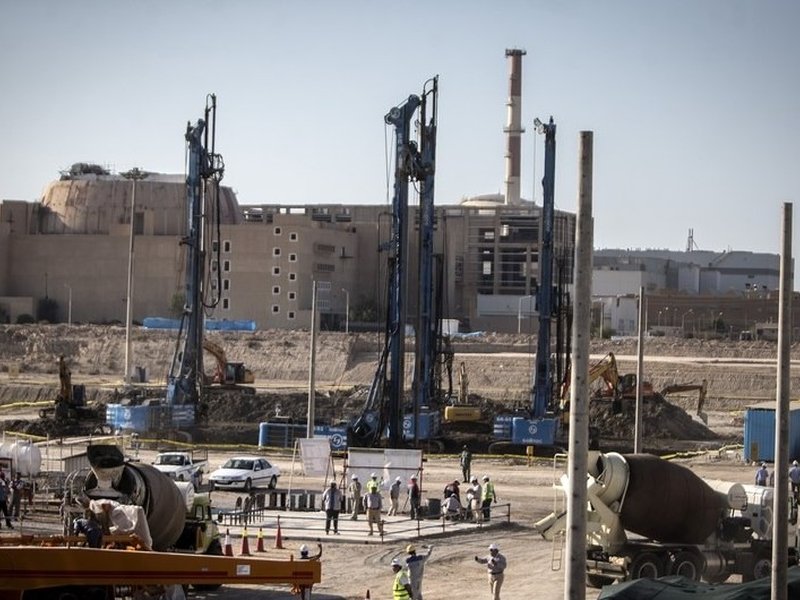
Washington, May 14 (IANS) Top US officials told senators that Iran remains only “weeks away” from weapons-grade uranium enrichment, as lawmakers raised concerns over rising global instability, nuclear modernisation delays and energy disruptions linked to the Gulf conflict.
During a tense Senate Armed Services Committee hearing on Wednesday (local time), US Energy Secretary Chris Wright said Tehran was dangerously close to producing weapons-grade uranium.
“When you’re at 60 per cent, you are, although the numbers don’t sound that way, you’re way more than 90 per cent of the way there for the enrichment necessary for weapons-grade uranium,” Wright told lawmakers. “It’s very concerning.”
The hearing focused on the Department of Energy’s fiscal year 2027 budget request and the future of America’s nuclear security programme. But much of the discussion centred on Iran, China and the future of US nuclear deterrence.
Senate Armed Services Committee Chairman Roger Wicker warned that the United States was facing “a far more complex and dangerous world” as China and Russia continue expanding and modernising their nuclear arsenals.
“China is moving well beyond a minimum deterrent,” Wicker said. “China’s building a far larger and more sophisticated nuclear force.”
He also criticised delays in rebuilding America’s nuclear infrastructure, much of which dates back to the Manhattan Project era. Wicker questioned whether the administration was moving with enough urgency to restore plutonium pit production and modernise the ageing stockpile.
Energy Secretary Wright defended the administration’s approach and said the National Nuclear Security Administration was restoring its focus on “deterrence, urgency and production”.
“The surest way to prevent nuclear war is to ensure America’s strength is never in doubt,” Wright said.
He said the US was currently executing seven major warhead modernisation programmes at the same time and claimed all were ahead of schedule.
Democratic lawmakers pressed the administration on the economic fallout from tensions in the Gulf and disruptions around the Strait of Hormuz.
Ranking member Jack Reed said the conflict had already driven up fuel prices for American families.
“According to public reports, this war has cost the American public as much as $37 billion in increased gas and diesel costs, or about $289 per household,” Reed said.
Lawmakers also questioned officials about whether the administration could resume explosive nuclear testing.
Jacky Rosen asked Wright whether the administration would commit to avoiding renewed nuclear tests. Wright replied: “To assure the reliability of our weapons, there is no need for explosive testing.”
NNSA Administrator Brandon Williams said the US conducts “more than a thousand tests on our nuclear stockpile every year” without nuclear detonations.
Artificial intelligence and energy security also emerged as major themes during the hearing. Williams said the agency would spend about $600 million this year on AI-related initiatives supporting nuclear security and weapons design.
Senators from both parties argued that nuclear energy would play a major role in future US energy security as demand rises from artificial intelligence systems, military infrastructure and advanced computing technologies.
--IANS
lkj/sd/