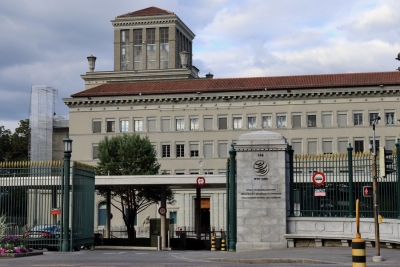
New Delhi, March 20 (IANS) India will make a strong pitch for further strengthening the world trade organisation (WTO) in its support for a fair multilateral global trading system, at a ministerial conference scheduled to be held in Cameroon from March 24–29 amid growing protectionism and geopolitical uncertainty around the world.
The Indian delegation at the WTO conference will be led by Commerce and Industry Minister Piyush Goyal, who will accompanied by Commerce Secretary Rajesh Agrawal and other officials of the ministry.
India is of the view that there is a need to bolster the WTO to enable the organisation to play a more important role in global trade.
Key issues on the agenda include the China-led proposal on Investment Facilitation for Development (IFD) Agreement, the continuation of the 28-year moratorium on e-commerce transmissions. Discussions are also expected around agriculture and the proposed fisheries subsidies (Fisheries-II) agreement, both critical areas for developing countries.
India maintains that the IFD is a plurilateral agreement being forced into a multilateral forum without full membership consensus. India argues that investment is not trade in goods or services, and negotiating it within the WTO sets a dangerous precedent. The move also raises concerns that simplified administrative procedures could restrict a country’s ability to regulate foreign direct investment (FDI) to suit its development priorities.
India’s stance on agriculture at the WTO centres on protecting its food security and supporting small-scale farmers, largely by demanding a permanent solution for public stockholding for food security purposes. India advocates for more equitable trade rules, aiming to limit developed countries' subsidies and protect its right to minimum support prices (MSP) without WTO interference.
The country also strongly supports protecting the livelihoods of its small-scale, traditional fishers at the WTO, pushing for long-term policy space and opposing curbs on subsidies that support their sustenance. India insists on a 25-year transition period for developing nations to comply with subsidy bans, emphasising that developed nations, responsible for large-scale industrial fishing, must take primary responsibility for reducing subsidies.
Sources indicated tariff actions by the United States, could also come up during discussions, as member countries raise concerns over protectionist measures.
India's broad stance remains that the World Trade Organisation (WTO) must be strengthened to play a more effective role in ensuring a fair and rules-based multilateral trading system.
--IANS
sps/na