
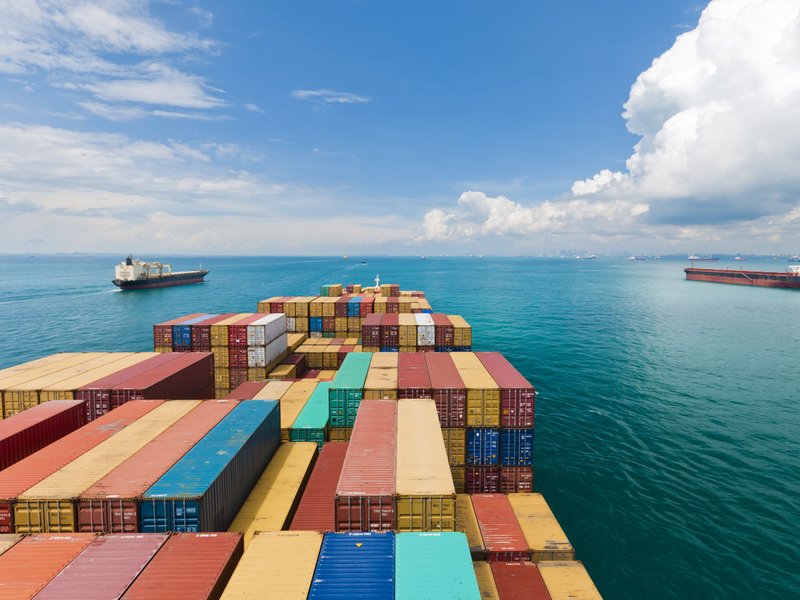
Muscat/ New Delhi, June 11 (IANS) The India‑Oman Comprehensive Economic Partnership Agreement (CEPA) is special as it comes into force at a time when India faces a sharp disruption in Gulf trade after the Strait of Hormuz crisis and also because of Oman's unique geography.
Oman’s unique geography including its coastline and major ports such as Salalah and Duqm which lie outside the Strait of Hormuz, keeping them accessible even when Strait traffic is disrupted, the report from Diplomat said.
The country shares land borders with Saudi Arabia to the west, the UAE to the northwest and Yemen to the southwest.
“Cargo offloaded from Indian ships at the Omani ports of Salalah and Duqm, could be trucked across to Saudi Arabia, Yemen, the UAE and beyond, bypassing the Strait of Hormuz,” the report noted.
"Importantly, Oman’s Musandam peninsula, located at the north of the country, reaches into the strategic Strait of Hormuz. Oman thus shares the entrance to the Hormuz Strait with Iran on the other side," the report added.
The media house cited Ajay Srivastava, founder of the Global Trade Research Initiative who pointed out Oman's strategic location as the reason which caused India’s trade with it to surge as attacks and closures of the Strait of Hormuz drove down India’s trade with other Gulf countries.
Imports from Oman jumped from $430 million in April 2025 to nearly $1.5 billion in April 2026 up almost 246.4 per cent, driven by increased purchases of crude oil and urea after shortages reduced supplies from other Gulf states.
India-Oman trade relationship already includes substantial cooperation in hydrocarbons, LNG, fertilizers, and petrochemicals.
CEPA creates a more predictable framework for investment and supply arrangements, reducing transactional uncertainty and encouraging long-term contracts.
The CEPA immediately grants 100 per cent duty‑free market access in Oman to 98 per cent of tariff lines covering 99.38 per cent of India’s exports to that market, up from the pre‑CEPA system of zero‑duty access for 15.3 per cent of exports, a recent report said.
Sectors dominated by small businesses such as iron and steel, textiles, leather, auto components and industrial equipment could see large international orders after the agreement, it added.
—IANS
aar/pk