
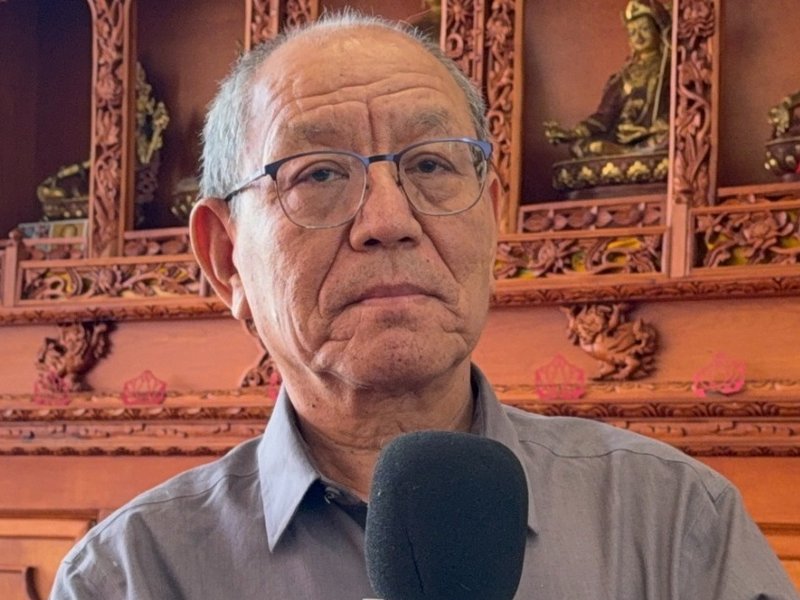

Washington, Aug 18 (IANS) India should recognise itself as a stakeholder in Tibet’s future because the Himalayan frontier is directly tied to its national security, a senior International Campaign for Tibet (ICT) official has said, warning that Beijing is placing trusted non-Tibetan officials in border areas.
“We believe that India is a stakeholder in the future of Tibet,” Bhuchung Tsering, Head of Research and Monitoring at the International Campaign for Tibet, told IANS in an interview. He said the Himalayan border made Tibet a matter of national security for India.
Tsering said New Delhi should support a future that protects Tibetan freedom and dignity while safeguarding Indian security. “I think India only has to think about its own interests and its own security,” he said.
His comments came as the Washington-based advocacy group released its 2026 annual report on Tibetan leadership ahead of the Chinese Communist Party’s 21st Party Congress in 2027.
The report argues that Beijing is cultivating a more repressive leadership in Tibet. It says political reliability, ideological conformity and forced assimilation are being placed above meaningful Tibetan representation.
Tibetans occupy only 62, or 25.8 per cent, of 240 senior posts examined across party, government, security and judicial institutions at provincial, prefectural and county levels, according to the report. Non-Tibetans hold 178 posts, or 74.2 per cent.
No Tibetan serves as party secretary in any of the five provincial-level administrations covering Tibetan areas. Only four of 19 prefectural-level and county-level administrations have Tibetan party secretaries. No Tibetan holds a military commander or political commissar post, it said.
“For effective decision-making process and for real power in determining the will of the Tibetan people, these people don’t have any power,” Tsering said.
He linked the pattern to what he described as a trust deficit. “China clearly doesn’t trust Tibetans enough to be giving them effective positions,” he said.
Tsering said the pattern was particularly significant for India. “When it comes to governance at the border level, they have people they can completely control,” he said of Chinese appointments in southern Tibetan areas adjoining India.
The report also warned that China’s 'Promoting Ethnic Unity and Progress Law', which took effect on July 1, and directives centred on 'Xi Jinping Thought on Party Building' would shape the next generation of leadership. It said the measures could further narrow space for Tibetan language, culture and identity.
Tsering urged governments to deepen engagement with the Central Tibetan Administration. “India obviously is doing much in terms of providing concrete support to the Central Tibetan Administration,” he said, adding that other governments should do more.
The Central Tibetan Administration is based in India's Dharamsala where the Dalai Lama established the Tibetan government-in-exile after fleeing Tibet in 1959.
--IANS
lkj/as