
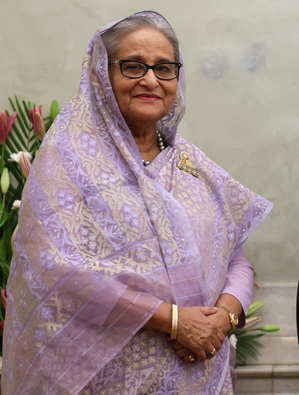
Hong Kong, July 20 (IANS) Bangladesh has formally sought the extradition of the country’s former Prime Minister Sheikh Hasina from India under the 2013 bilateral extradition treaty, which allows New Delhi to reject a request if it considers it politically motivated or not made in good faith, a report has stated.
Hasina's recent announcement that she intends to return to Bangladesh and surrender voluntarily does not resolve the matter. If anything, it raises the stakes, with India potentially having to assess not just the extradition request but also the nature of the judicial process awaiting the former Prime Minister, a report in Hong Kong-based English newspaper 'Asia Times' detailed.
In November last year, Bangladesh’s International Crimes Tribunal (ICT) sentenced Hasina, along with former Home Minister Asaduzzaman Khan Kamal, to death following trials in absentia for crimes against humanity related to July –August 2024 demonstrations.
"Eight months later, Hasina says she now intends to return to Bangladesh by December, together with senior Awami League colleagues, including a former Home Minister who faces a death sentence of his own, to surrender voluntarily and put her record before the country in person rather than leave it settled by a trial conducted in her absence," the Asia Times report mentioned.
"Whatever one makes of that gambit, it turns what might have been a closed legal chapter back into a live political question, and reopens a harder one underneath it: What happens when the institution built to deliver justice is compromised before the trial even begins," it added.
According to the report, Bangladesh’s former "unelected" interim government led by Muhammad Yunus amended the tribunal’s founding statute four times through executive ordinance while governing without a functioning Parliament, despite the constitution requiring parliamentary ratification – approval that "never came and could not come."
"The bench itself was reconstituted with judges who had not attained the rank the law requires, following the removal of the country’s chief justice and other senior judges months earlier. The prosecution’s central evidence, leaked surveillance recordings, was admitted without any hearing on how it had been obtained or whether that method was lawful," the report mentioned.
"And the trial itself moved from the appointment of defence counsel to a death sentence in under five months, on a casualty record contested enough that the United Nations’ own fact-finding mission, examining the same events, said the evidence did not yet support individual criminal conviction," it added.
Highlighting Hasina's stated intention to return and its implications for India, the report said New Delhi does not need to weigh in on Bangladesh's internal politics. Instead, it only needs to examine how the tribunal was constituted and determine whether a conviction delivered under such circumstances satisfies the extradition treaty's threshold for cooperation.
"That is a legal judgment, not a partisan one, and it can be made without endorsing or condemning anyone’s conduct in the events of 2024," the report noted.
--IANS
scor/ksk/as