
Kabul, April 30 (IANS) Former Afghanistan President, Hamid Karzai, on Thursday raised serious concerns over a recent analysis by the United Nations International Children's Emergency Fund (UNICEF) which warned that Afghanistan risks losing up to 20,000 women teachers and 5,400 healthcare workers by 2030 amid continuing restrictions on girls’ education and women’s employment in the country.
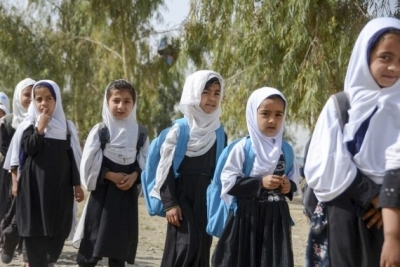
The UN agency report also indicated that if the ban persists until 2030, more than two million girls in Afghanistan will be deprived of their right to education beyond primary school.
"Expressing deep concern over this matter, I would like to point out that the continuation of the ban on education and the closure of the doors of schools and universities to girls will lead to the weakening of national capacity, creating severe needs and dependency on the outside for Afghanistan," Karzai wrote on X while reacting to the report.
The former President emphasised that Afghanistan's challenges must be addressed by its own educated citizens, underscoring the importance of equal access to education for both girls and boys.
"While considering universal education to be vital, I once again emphasise that the doors of schools and universities must be opened to girls as soon as possible, and by providing opportunities for education and higher learning to the youth — both girls and boys — the problems and needs of the country should be resolved and addressed by the capable hands of its own children, allowing Afghanistan to achieve independence from external dependencies," he added.
In its latest analysis titled 'The Cost of Inaction on Girls' Education and Women's Labour Force Participation in Afghanistan', UNICEF said that female representation in the civil services fell from 21 per cent to 17.7 per cent between 2023 and 2025.
It cautioned that the declining number of trained women professionals in schools and hospitals across Afghanistan would have devastating consequences for children's education, health outcomes and future opportunities.
"Afghanistan cannot afford to lose future teachers, nurses, doctors, midwives, and social workers, who sustain essential services. This will be the reality if girls continue to be excluded from education," said UNICEF Executive Director Catherine Russell.
"We urge the de facto authorities to lift the ban on secondary education for girls and call on the international community to remain committed to supporting girls' rights to learn,” she added.
--IANS
scor/as