
New Delhi, April 29 (IANS) In a significant boost to India’s maritime strike capabilities, the Defence Research and Development Organisation (DRDO) and the Indian Navy successfully carried out the maiden salvo launch of the Naval Anti-Ship Missile–Short Range (NASM-SR).
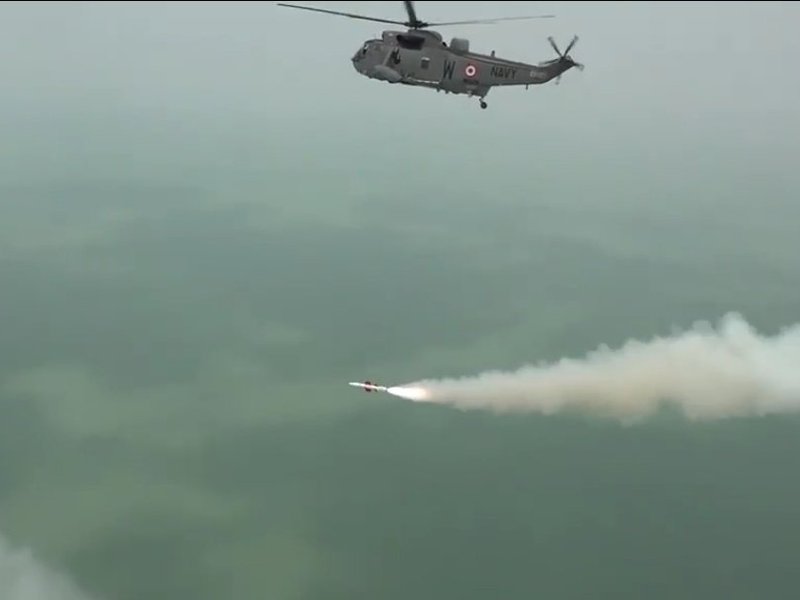
The test was conducted from a naval helicopter platform off the coast of the Bay of Bengal near Odisha. This development marked a key milestone in India’s indigenous defence development.
During the trial, two NASM-SR missiles were launched in quick succession from the same helicopter, demonstrating the system’s ability to execute a coordinated salvo strike.
This achievement makes it the first successful salvo launch of an advanced air-launched anti-ship missile system of its kind in India. The test validated not only the missile’s precision and reliability but also the operational readiness of the helicopter-based launch platform.
The NASM-SR is designed to strengthen the Indian Navy’s capability to engage hostile naval targets at short range with high accuracy. Its development reflects India’s ongoing push toward self-reliance in defence technology and its focus on enhancing maritime security in strategically important waters.
Defence Minister Rajnath Singh congratulated the teams involved, including DRDO, the Indian Navy, and the Indian Air Force, along with industry partners such as DcPP collaborators.
He said that the successful development and testing of the NASM-SR would significantly enhance the operational capabilities of India’s armed forces.
Officials highlighted that the missile system is equipped with modern guidance and targeting features, making it highly effective against enemy ships. The successful trial also underscores the synergy between India’s defence research agencies and its armed forces, they explain.
As India continues to modernise its military assets, the successful salvo launch of NASM-SR stands as a testament to the country’s growing technological prowess and commitment to strengthening national security, say officials.
--IANS
brt/dan