

New Delhi, July 29 (IANS) China’s investments in Africa and other developing countries are now concentrated in equity participation, public‑private partnerships and local‑currency financing which has replaced the large sovereign credit lines that constituted Chinese development finance earlier, according to an article in South Africa’s news website IOL.
“This marks a departure from the expansive vision of the BRI’s early years, when surplus capital and industrial capacity were projected outward to reshape growth across the Global South. Today, Chinese firms continue to build and invest – particularly in renewable energy, critical minerals and advanced manufacturing – but the era of megaproject lending has receded,” the article by Edwin Naidu states.
Beijing’s growing emphasis on smaller projects signals a strategic pivot. Capital now flows toward sectors aligned with long‑term national priorities which include renewable energy networks in Africa, mineral partnerships in Latin America, digital infrastructure in Southeast Asia and manufacturing ecosystems that reinforce supply‑chain resilience. Connectivity remains important, but no longer pursued as an end in itself, the article states.
The article highlights that construction contracts accounted for nearly two‑thirds of total engagement last year, while policy‑bank lending remained well below its mid‑2010s peak.
“For governments across the Global South, the policy implications are clear. Access to Chinese capital is more conditional, commercially oriented and strategically selective. Projects tied to green transitions and supply‑chain resilience are more likely to secure support; prestige infrastructure with uncertain returns is less likely to proceed,” the article observes.
It observes that China’s political economy has reshaped its priorities. The slowdown in the Chinese economy, the rising government debt and the need for technological self‑sufficiency have redirected capital toward domestic needs such as semiconductor production and energy transition.
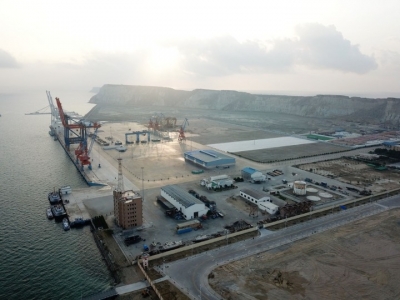
The impact of Chinese investments in various countries have also not been very beneficial which has imposed limits. The article points out that Zambia’s debt restructuring exposed the fragmented nature of China’s financing architecture, while Sri Lanka’s Hambantota port highlighted how grand ambitions could outpace economic fundamentals.
Similarly, Pakistan’s recalibration of the China‑Pakistan Economic Corridor – from highways and coal plants to agriculture and digital infrastructure – reflects fiscal constraints and security risks.
--IANS
sps/na