
Milwaukee, Oct 1 (IANS) Canada has urged the United States to work with it to address pressures on the deeply integrated North American auto industry, with Canadian International Trade Minister Maninder Sidhu saying workers on both sides of the border are facing similar challenges.
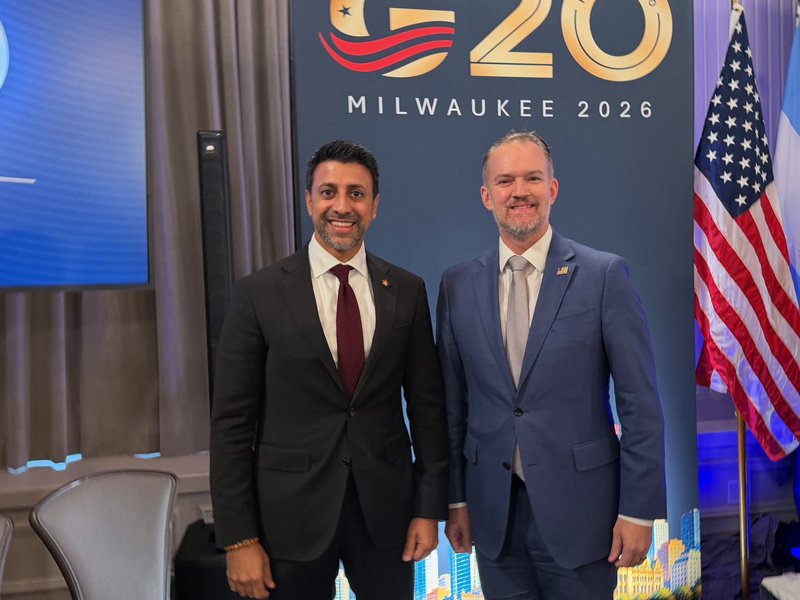
Sidhu said he raised the auto sector and interconnected supply chains during talks with US Trade Representative Jamieson Greer on the sidelines of the G20 Trade Ministers’ Meeting in Milwaukee.
The Canadian minister said he had encountered auto workers in Milwaukee who had been laid off. He drew a parallel with job losses in his own constituency, which has operations of automaker Stellantis.
“I came across some workers here in Milwaukee that were laid off in the auto sector,” Sidhu told reporters.
“And I represent the constituency of where we have Stellantis, hundreds of folks laid off in the auto sector.”
Sidhu said the experience underscored the extent to which the Canadian and American automobile industries were connected.
“I strongly believe the auto sector is stronger when we're able to work together,” he said.
“And so that was my message that, you know, you're facing some of the same challenges that we're facing. Let's help each other and let's work through something.”
Sidhu said the discussion with Greer came as G20 trade ministers examined broader pressures on global supply chains.
“Here we're talking a lot about supply chains,” he said, pointing to steel and food among the issues being discussed.
Sidhu said supply chains between Canada and the United States were particularly intertwined in the automobile industry.
He said Canada's minister responsible for relations with the United States was leading those discussions.
“My job as the international trade minister is to continue to support Canada diversification efforts and work with counterparts and colleagues all around the world to increase our access to new markets,” he said.
Asked separately about US tariffs, export restrictions and prospects for reducing tensions between the two neighbours, Sidhu said he had known Greer for some time and respected him.
“I think there's an understanding,” Sidhu said.
He said the two had previously worked together in international trade forums, including the World Trade Organisation and G7.
Sidhu said many of the economic pressures facing Canada and the United States were also confronting other G20 economies.
“I think it's important when you look at some of the problems that we face, and this is what G20 economies are dealing with, the prices, the impacts on energy, the impacts on inflation, the impacts on supply chains and critical minerals,” he said.
“And so many of us are dealing with the same challenges, and I think it's imperative that as partners, we continue to work together to find solutions for our citizens.”
Sidhu declined to identify the most significant remaining differences in the Canada-US negotiations.
“Of course we want to close the gaps, that's the whole point of negotiations,” he said.
But he made clear that Ottawa was seeking an agreement that protected Canadian workers and industries.
“I think at the end of the day, you want a good deal for your workers and industries and Canada won't accept anything less than that,” Sidhu said.
“When you negotiate with Canada, it has to be mutually beneficial,” he added.
Canada and the United States have one of the world's most closely integrated automotive manufacturing systems, with vehicles and components routinely crossing the border during production. The sector supports manufacturing and supply-chain employment in both countries.
--IANS
lkj/ksk/dan