
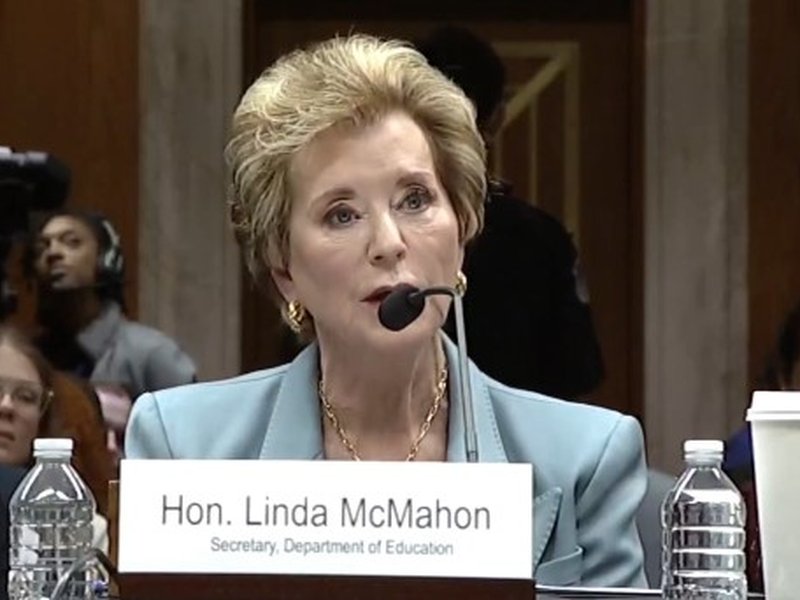
Washington, May 15 (IANS) The Trump administration intensified its push to rein in soaring college costs, with Education Secretary Linda McMahon telling Congress that 43 million Americans are now carrying a staggering $1.7 trillion in student debt.
Appearing before the House Education and Workforce Committee, McMahon defended sweeping student loan reforms and argued that unlimited federal lending had fuelled tuition inflation across the country.
“We have $1.7 trillion in debt, 43 million students,” McMahon said. “We really have to do something to bring down the cost of college.”
The hearing quickly turned into a heated debate over the administration’s higher education overhaul, particularly new caps on graduate student borrowing for programmes such as nursing, teaching and social work. Democrats warned the changes could worsen workforce shortages and force students into expensive private loans.
Representative Joe Courtney of Connecticut accused the administration of making advanced nursing education harder to afford at a time when the country faces severe shortages of healthcare workers. He said some graduate nursing programmes already exceed the new federal loan caps.
McMahon rejected the criticism and insisted the reforms were designed to pressure universities into lowering tuition costs.
“Our goal is to bring down the cost of higher education,” she said, adding that some universities had already begun reducing prices for graduate programmes after the new rules were announced.
She argued that federal lending policies had allowed colleges to raise fees unchecked for years.
“Universities have been allowed to charge whatever they wanted,” McMahon told lawmakers.
The Education Secretary also promoted the administration’s overhaul of the federal student aid system, saying the redesigned FAFSA application had launched earlier than ever and now takes about 35 minutes to complete instead of several days.
The administration had strengthened identity verification measures and prevented more than $1 billion in fraudulent student aid payments, including scams involving “ghost students” and AI-generated applications, he told the lawmakers.
“We started to see little flags,” she said while describing how officials identified suspicious applications through IP addresses and duplicate photo IDs.
Republicans on the committee praised the reforms as necessary to restore accountability to the student loan system. Committee Chairman Tim Walberg said the administration had simplified repayment programmes and returned “responsibility” to borrowers after what he described as failed Biden-era loan forgiveness efforts.
But Democrats accused the administration of undermining access to higher education for low-income Americans. Representative Ilhan Omar of Minnesota said the loan caps would funnel students into the private lending market instead of making education affordable.
“You are failing at your job,” Omar told McMahon during a tense exchange over nursing shortages and graduate borrowing limits.
The debate comes as student debt remains one of the biggest economic and political issues in the United States, especially among younger Americans struggling with inflation, housing costs and rising tuition fees. The Biden administration had attempted broad student loan forgiveness programmes, many of which faced legal challenges and Republican opposition.
The issue is also being closely watched by Indian students, who form one of the largest international student groups in the United States. Changes in federal loan policies, graduate programme affordability and workforce-focused education reforms could have long-term implications for foreign students pursuing higher education and specialised professional degrees in America.
--IANS
lkj/rs