
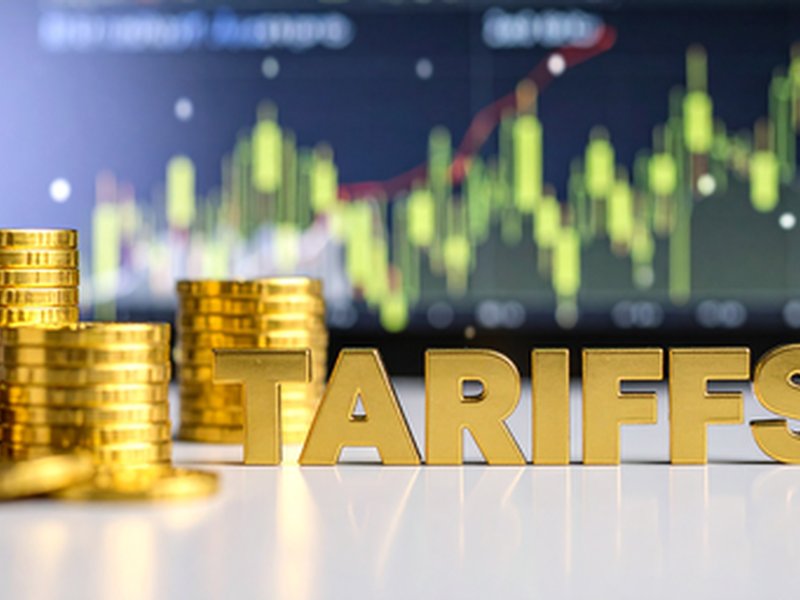
Washington, Nov 26 (IANS) Several US trading partners, including India, the European Union and China, rejected Washington's claims of industrial overcapacity as the Trump administration proposed tariffs on 14 economies, including duties of up to 25 per cent on Indian goods.
India and the EU disputed the findings, while China rejected the premise ahead of Wednesday's announcement. South Korea and Japan emphasised expectations that Washington would honour existing trade agreements, and Vietnam said it would challenge the findings through the US consultation process.
The proposed duties have not taken effect and remain subject to public comments and hearings.
India's Ministry of Commerce and Industry said New Delhi had participated constructively throughout the investigation and maintained that it "does not have structural excess capacity in any sector".
The ministry said it was examining the US notice. It argued that trade concerns should be addressed through ongoing negotiations for a bilateral trade agreement and reaffirmed India's commitment to concluding that agreement early.
The Office of the US Trade Representative proposed tariffs of up to 25 per cent on Indian goods, with exemptions, describing the rate as "net of existing Section 301 tariffs." It said it would consider a 17 per cent rate if India reaches a reciprocal trade agreement addressing the investigation's findings.
US Trade Representative Jamieson Greer determined that policies in the 14 economies were unreasonable and burdened or restricted American commerce, making them actionable under Section 301 of the Trade Act of 1974.
In Brussels, European Commission spokesperson Olof Gill rejected the suggestion that Europe was a source of excess capacity, arguing that the bloc was among the economies most exposed to the problem.
Gill said Washington and Brussels shared concerns about state-driven overcapacity concentrated in other countries and criticised the absence of joint action, Air Cargo Week reported.
The EU faces a proposed 15 per cent rate, accounting for ordinary customs duties and existing Section 301 tariffs, with exemptions.
China's Foreign Ministry spokesperson Guo Jiakun said disputes should be resolved through consultations based on equality, mutual respect and mutual benefit.
"The so-called issue of 'industrial overcapacity' does not really exist and should not be used as a pretext for political manipulation," he said.
Guo was responding to a question about the anticipated US announcement. He urged both countries to implement their presidents' understandings and maintain stable economic and trade relations.
South Korea's Trade, Industry and Energy Minister Kim Jeong-kwan said Washington had assured Seoul it would honour the previously agreed 15 per cent rate, according to an English-language report by The Asia Business Daily.
The South Korean government said it would submit further comments and continue consultations to preserve the balance of benefits.
A Japanese government official similarly said Tokyo understood the proposal to remain within the previously agreed 15 per cent level, Financial News reported, citing NHK. The official said Japan would continue communicating with Washington to ensure the agreement was honoured.
Those comments reflected Tokyo's understanding of the proposal, rather than a final US decision.
Vietnam's Ministry of Industry and Trade stressed that the proposed duties were not yet effective. It said it would participate in the US hearing, submit written rebuttals to findings it considered inaccurate and continue consultations with American agencies.
Vietnam faces a proposed rate of up to 35 per cent, potentially reduced to 20 per cent under a reciprocal trade agreement. The ministry said both countries were working to conclude negotiations as soon as possible, and that negotiations and domestic trade-policy measures could support a lower final rate.
USTR made no determination on Norway or Mexico, the other two economies included in the investigations launched in March.
Written comments and requests to appear at hearings are due January 5, 2027. Public hearings begin January 25.
--IANS
lkj/sd/