New Delhi, July 1 (IANS) Pakistan's slow growth is more than an economic challenge - it is the country's foremost national security threat, and no amount of military strength, diplomacy, or managed stability can rescue a nation that is sliding deeper into poverty while its population keeps growing, according to an article in the Pakistani media.
The security establishment's greatest adversary is not India, Afghanistan, or terrorism, but Pakistan's own slow economic decay. This is not about GDP; it is about the future, which increasingly appears precarious, the article in the Lahore-published Friday Times contended.
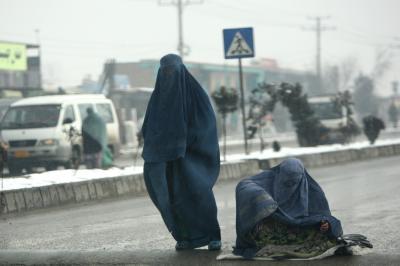
It highlights that Pakistan under Prime Minister Shehbaz Sharif has posted its weakest growth in six decades at 2.33 per cent annually, barely matching population growth. Pakistanis are poorer than in 2022 as millions have slipped into poverty while technocrats quibble over whether the figure is 29 per cent or 40 per cent, as though statistical debate can obscure decline, it added.
The article lamented that the establishment watches this slow-motion crisis with little urgency, which appears to be its greatest strategic miscalculation. Pakistan's median age is around 20, and the official NEET rate -- youth aged 15–24 not in employment, education, or training -- stands at 32–33 per cent nationally. A state cannot preserve strategic strength while its economic foundations erode, it stressed.
There is another compelling reason to prioritise economic development: the changing character of war. The US–Iran confrontation and the brief India–Pakistan escalation in May 2025 both signal a structural shift in warfare. Military power is moving from traditional platforms to networked systems built on algorithms, autonomous platforms, and precision strikes. Pakistan's military remains largely configured for the industrial wars of the twentieth century. Adapting demands a costly overhaul of the defence ecosystem -- conceivably around 2 per cent of GDP -- built on technological capability and intellectual capital, the article pointed out.
From 2022 to 2026, Pakistan’s real per capita growth was flat or slightly negative ((–) 0.2 per cent). The government has no growth strategy -- only a stabilisation narrative borrowed from the IMF and presented as achievement. While it claims foreign policy successes, these were initiated and led by Field Marshal Asim Munir, as widely recognised internationally. The civilian government is a stranger in its own administration, while the real decisions are made by mandarins in Islamabad and (Rawal)Pindi, the article added.
--IANS
sps/vd