
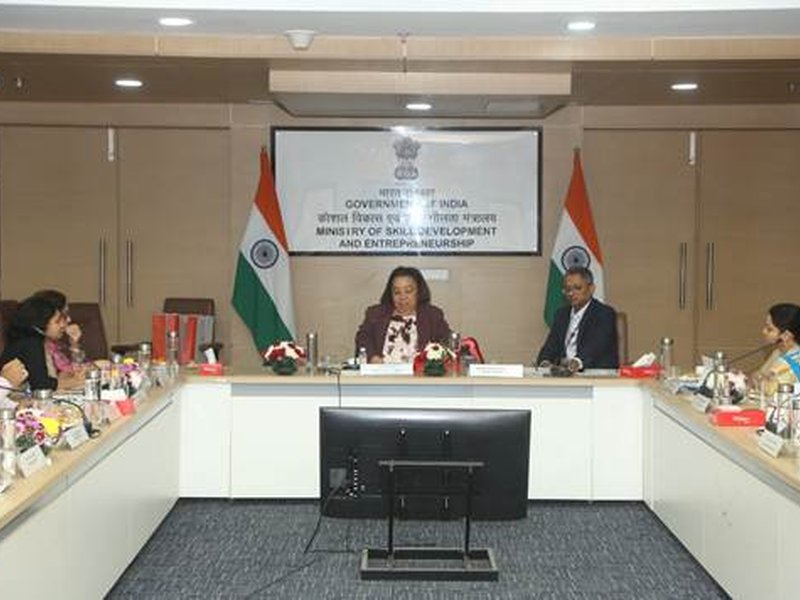
New Delhi, Nov 18 (IANS) The Central government held discussions with the UN Special Rapporteur on advancing inclusive skilling and economic participation of persons with disabilities, an official statement said on Wednesday.
Upon United Nations Special Rapporteur on the Rights of Persons with Disabilities, Heba Hagras’ official visit to India, the Ministry of Skill Development and Entrepreneurship (MSDE) interacted with her on expanding pathways of disabled sections to employment and entrepreneurship.
“The interaction provided an opportunity to examine how skill development systems can support the dignity, autonomy and economic participation of persons with disabilities,” the statement from the Ministry of Skill Development and Entrepreneurship said.
The dialogue centred on addressing barriers across the journey from access to training and certification to employment, retention and career progression, in keeping with the principles of the Convention on the Rights of Persons with Disabilities (CRPD).
Heba Hagrass, United Nations Special Rapporteur on the rights of persons with disabilities said the right to work begins with having a real opportunity to learn, choose and participate.
“Inclusive vocational training must equip persons with disabilities for the full range of opportunities in a changing economy, with accessibility and reasonable accommodation built into its design,” she said.
“For persons with disabilities, access to training must translate into the freedom to choose a vocation, demonstrate competence and progress in the world of work,” said Niranjan Kumar Sudhansu, Additional Secretary, MSDE.
The engagement brought into focus the importance of accessible training infrastructure, digital learning platforms, learning materials and assessment processes. The engagement identified reasonable accommodation, assistive technologies and the capacity of trainers and assessors as important considerations in enabling learners with different disabilities to participate on an equal basis.
The participants stressed embedding accessibility and appropriate support within mainstream training programmes, alongside disability-specific interventions, to enable greater participation and inclusion.
Entrepreneurship and self-employment were also discussed as important pathways to economic independence, including the role of access to finance, mentoring, technology and markets in supporting entrepreneurs with disabilities.
—IANS
aar/pk