
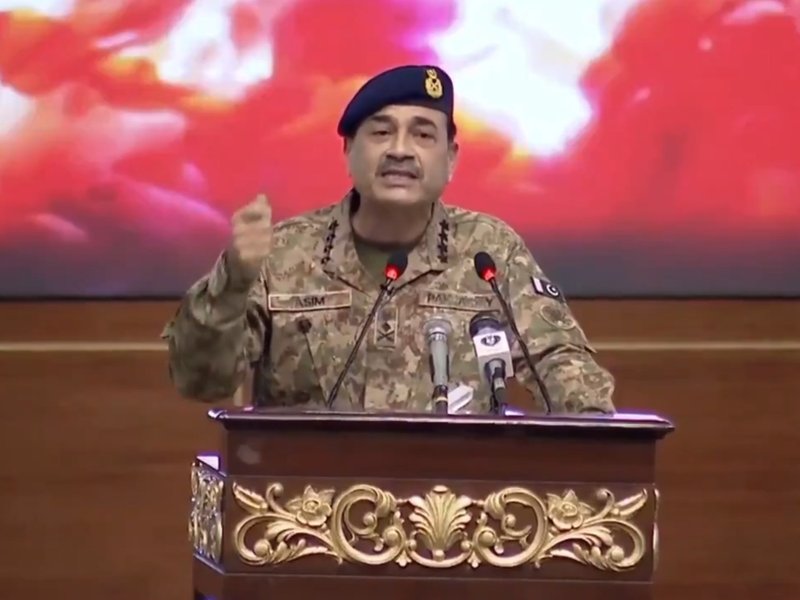
New Delhi, March 27 (IANS) India on Friday sharply criticised the recent comments made by Pakistani Army Chief Asim Munir during a meeting with senior Shia clerics of the country, in which he reportedly stated that those sympathetic to Iran should relocate there.
Addressing a weekly media briefing in New Delhi, Ministry of External Affairs (MEA) spokesperson Randhir Jaiswal said that such remarks reflects Pakistan's long standing pattern of persecution against minorities, including the Shia community.
"Such comments are not isolated incidents, but are part of Pakistan's systemic victimisation of its minorities, including the Shia minority in that country. The shrinking numbers of minorities in Pakistan over several decades reflect the kind of fear, persecution, oppression and neglect that they have had to endure at the hands of the Pakistani state. I need not elaborate on the abysmal record of Pakistan when it comes to the protection of human rights of its minorities, which is also very well documented," said Jaiswal.
A recent report highlighted that while Pakistan advocates against 'Islamophobia' abroad, the persistence of such conditions at home raises legitimate questions about the country's credibility.
The recurring claims of Islamophobia by Islamabad on the global stage, it cited, call for closer scrutiny, not unquestioned approval.
According to a report in the European Times, the rhetoric of victimhood has become a diplomatic instrument, used to divert attention from Pakistan’s troubling record toward Muslim communities within and outside its borders.
“At the heart of the issue lies a contradiction that is increasingly difficult to ignore. A state that positions itself as a defender of Muslims worldwide continues to preside over systemic discrimination and violence against its own Muslim minorities. The persecution of Shia communities in Pakistan is neither incidental nor isolated. Sectarian attacks on Shia mosques, processions, and neighbourhoods have persisted for decades, often with inadequate accountability,” the report detailed.
“The situation of the Ahmadiyya community is even more stark. Constitutionally declared non-Muslim, Ahmadis face legal discrimination, social exclusion, and periodic mob violence. Their mosques are attacked, their religious practices criminalised, and even the simple act of self-identification as Muslim can lead to prosecution. These are not marginal failures. They are structural realities embedded within the state’s legal and political framework,” it mentioned.
The report noted that the contradiction reaches beyond Pakistan’s borders, with its military operations in Afghanistan, including those during Ramadan, resulting in civilian casualties in a neighbouring Muslim country.
“Whatever the stated security rationale, the optics and the human cost are difficult to reconcile with claims of religious solidarity. The idea of a unified Muslim ummah is frequently invoked in diplomatic rhetoric, yet it appears to be selectively applied when strategic interests are at stake,” it stated.
The pattern of “selective solidarity”, it said, is evident even in Pakistan's relations with major Muslim partners. Under the leadership of General Asim Munir, the report said, Pakistan has been hesitant to meet Saudi Arabia’s expectations despite longstanding security and defence understandings.
--IANS
scor/as