
New Delhi, Nov 26 (IANS) India registered a record 378.53 million tonnes of foodgrain production in 2025–26, which represents an increase of a whopping 208.06 lakh tonnes over the production of 3577.32 lakh tonnes recorded in 2024-25, according to the final crop estimates released on Thursday by Union Agriculture Minister Shivraj Singh Chouhan.
Addressing a press conference here, the minister also said that despite serious weather-related challenges, including El Nino and a delay in the monsoon, India’s kharif foodgrain production in 2026-27 is estimated at 1671.43 lakh metric tonnes. This is 97.67 lakh tonnes higher than the average production recorded over the previous five years, reflecting the resilience and determination of the country’s farmers, he added.
Chouhan said that India was not only meeting its domestic food requirements but also making a substantial contribution to feeding the world. In global agricultural rankings, India holds the first position in the production of rice, pulses, jute, millets and spices. It ranks second after China in wheat, cotton, groundnut, fruits and vegetables, and second after Brazil in sugarcane production.
Expressing satisfaction over the country’s achievements, Chouhan said that India had adequate stocks of both rice and wheat.
The minister highlighted that Indian rice was now making its mark across international markets, with exports registering a growth of 5 per cent. The aroma and quality of Indian basmati rice were reaching consumers across the world, including the United States, Canada and countries in the Middle East. He said that this growing global presence reflected the strength of Indian agriculture and the country’s ability to contribute to international food supplies while meeting its own requirements.
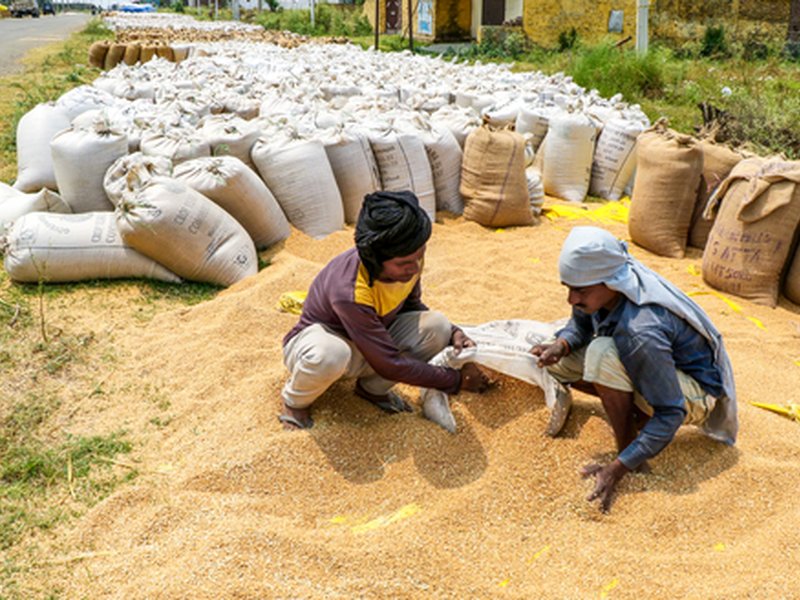
Total rice production has increased by 49.70 lakh tonnes from 1501.84 lakh tonnes in 2024-25 to a record 1551.54 lakh tonnes in 2025-26. Wheat production has also reached a historic level of 1220.64 lakh tonnes, registering an increase of 41.19 lakh tonnes over the 1179.45 lakh tonnes produced in 2024-25. These figures underline the continued strength of India's two major foodgrain crops and the country's capacity to maintain high levels of production.
Maize production has risen sharply from 434.09 lakh tonnes in 2024-25 to 550.25 lakh tonnes in 2025-26. Total production of nutri-cereals and coarse cereals stood at 740.80 lakh tonnes, of which ‘Shri Anna’ (millets) accounted for 172.09 lakh tonnes. Total pulse production increased by 15.57 lakh tonnes, from 256.83 lakh tonnes in 2024-25 to 272.40 lakh tonnes. Within this category, moong registered a new record of 43.96 lakh tonnes, while gram production stood at 125.13 lakh tonnes and tur (arhar) at 35.99 lakh tonnes. The increase across these crops highlights the contribution of diversification and the growing importance of pulses and millets in the country’s agricultural production.
Total oilseed production increased by 2.66 lakh tonnes over the previous year’s 429.89 lakh tonnes, reaching a record 432.55 lakh tonnes. Groundnut production reached a record 131.71 lakh tonnes, an increase of 12.29 lakh tonnes over the 119.42 lakh tonnes recorded in the previous year. Rapeseed and mustard production also reached a new high of 137.66 lakh tonnes, registering an increase of 10.99 lakh tonnes over the previous year's 126.67 lakh tonnes. Soybean production stood at 126.36 lakh tonnes.
Among commercial crops, sugarcane production was recorded at 5037.29 lakh tonnes, cotton production at 280.06 lakh bales (each weighing 170 kg), and jute and mesta production at 94.28 lakh bales (each weighing 180 kg). The performance of groundnut, rapeseed and mustard, in particular, contributed to the record overall oilseed output.
Chouhan said that after achieving a surplus position in rice and wheat, the government’s focus was now firmly on crop diversification and making the country self-reliant in pulses and oilseeds. He said that domestic demand for pulses and edible oils was continuing to rise, making it important to increase production and reduce dependence on imports. To address this requirement, concerted efforts were being undertaken in mission mode through the National Pulses Mission and National Oilseeds Mission.
The minister said that these initiatives are aimed at strengthening domestic production and meeting the country’s growing requirements. The positive impact of these efforts was now becoming evident in the final production figures, particularly in the improved output of pulses and oilseed crops. The emphasis on diversification would also help broaden the agricultural production base and support farmers in taking up a wider range of crops.
--IANS
sps/uk